Tick Identification Guide
Tiny Tick Guide: How to Spot It and What to Do
Learn how to spot a tiny tick, tell it from lint or skin debris, and know what to do next for people and pets.
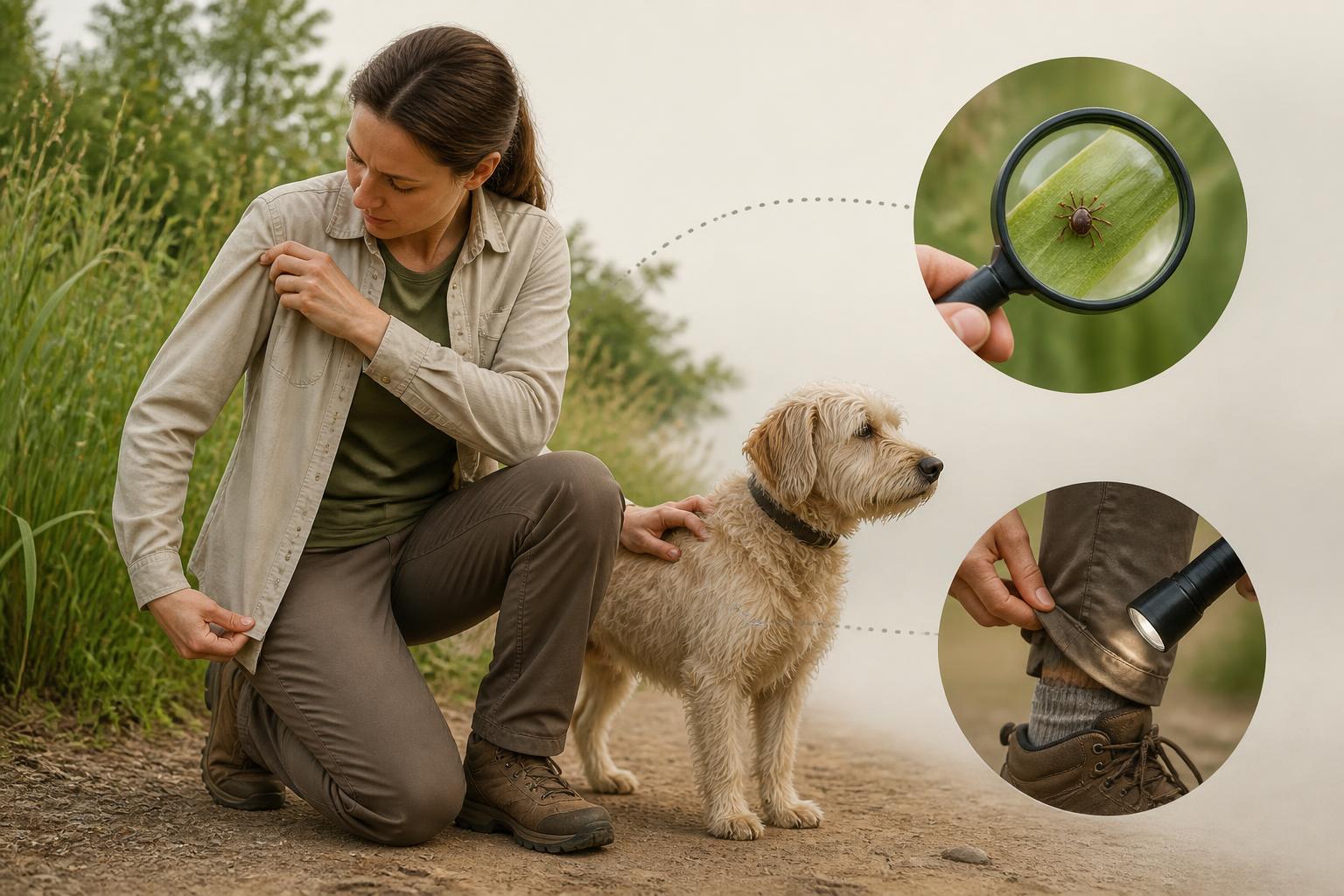
A tiny tick is a very small tick in its larval or early nymph stage, and it can be easy to miss because it may look like a speck, debris, or a dark dot on skin, clothing, or fur. The key difference is that a tick has a body and tiny legs, while lint and dirt do not. If you are unsure, inspect it closely and treat any embedded or attached tick as something to remove carefully and follow up on.
For a broader visual comparison, see What Does a Tick Look Like? Size, Shape, and Color. If you are checking a dog, Dog Tick Size: What to Expect and How to Spot It can help you compare what you see.
Short safety note before you inspect
Ticks can carry illness, and a tick bite can also leave a sore or irritated spot. The safe next step is to remove a tick promptly if it is attached, or save a clear photo if you are unsure what you found. If a person develops fever, expanding redness, unusual fatigue, a rash, or signs of an allergic reaction, contact a clinician. If a dog has a swollen bite site, marked scratching, lethargy, or a tick that seems stuck under the skin, contact a veterinarian.
What a tiny tick usually looks like
Fact: a tiny tick is often only a pinhead-sized or sesame-seed-sized speck, depending on stage and whether it has fed. Reading: that means the shape matters more than color alone, because a very small tick can look brown, tan, reddish, or nearly black.
Fact: ticks have eight legs after the larval stage, while larvae have six. Reading: if you can see leg-like projections around a small oval body, it is more likely to be a tick than a stain or seed.
Fact: an attached tick may appear slightly raised from the surface of skin or fur. Reading: a flat dot that wipes away easily is less consistent with a tick, while a fixed bump deserves a closer look.
| What you see | Fact to check | What it may mean |
|---|---|---|
| Small dark dot | Does it move when viewed closely? | Movement suggests an arthropod, not dirt. |
| Speck with legs | Can you count tiny legs near the body? | Visible legs support a tick-like ID. |
| Raised point on skin or fur | Is it fixed in place? | Attachment makes tick involvement more likely. |
| Brown flake or lint | Does it brush off? | Easy removal points away from a tick. |
Seed tick and tiny tick: how people use the terms
Seed tick is a common term for very small ticks, especially immature ones. Reading: if someone says “seed tick,” they usually mean a tiny tick that is hard to notice, not a separate kind of pest.
Fact: immature ticks can be found in outdoor areas where wildlife, grass, leaf litter, or brush are present. Reading: if you were recently in those places, a tiny tick is more plausible than if you were indoors all day.
For more on where they hide, see Where Ticks Are Found: A Practical Guide to Common Hotspots. If you need a step-by-step search routine, Tick Check: How to Spot Ticks on Skin, Clothing, and Pets is a helpful next read.
Photo clues that help you decide
Start with a clear, well-lit photo. Fact: a close photo can show body shape, leg placement, and whether the spot is attached. Reading: even without identifying the exact species, a photo can help you decide whether you are looking at a tick, a bite mark, or harmless debris.
Use this quick checklist when you compare the image or the real object:
- Look for a body that appears oval or rounded.
- Check for legs near one end or around the sides.
- Look for a fixed point of attachment.
- Note whether the spot is on skin, in hair, on clothing, or in pet fur.
- Compare size against a known object, such as a grain of sand or a pencil tip, without touching it.
If you want a visual library for comparison, Photographs of Ticks: A Visual Species Reference may help you compare general features. If the spot is on a dog and seems swollen, Engorged Tick on a Dog: What It Means and What to Do explains what swelling can suggest.
How to tell a tiny tick from look-alikes
Fact: lint, seed husks, and dried skin flakes do not have jointed legs. Reading: if the object has clear leg segments, it is less likely to be debris.
Fact: freckles and small scabs are part of the skin and do not move. Reading: if the spot seems anchored in a way that is part of the skin, that calls for a different response than if it is attached on the surface.
Fact: some tick species have visible markings, even when small. Reading: markings can help, but size alone is not enough to identify a species with confidence.
Quick comparison
| Look-alike | What stays true | Why it matters |
|---|---|---|
| Lint | Light, fibrous, no legs | Usually brushes away easily |
| Freckle | Flat skin pigment | Part of the skin, not an attached organism |
| Seed tick | Very small body with legs | Needs careful removal if attached |
| Scab | Dry crust from healing | May bleed or lift if disturbed |
If it is attached, what to do next
Fact: attached ticks should be removed as soon as practical with fine-tipped tweezers or another tick-removal tool, if available. Reading: the goal is to detach the tick cleanly without squeezing the body.
Fact: after removal, the skin should be cleaned and the site watched for changes. Reading: that means noting redness, swelling, pain, or any new rash over the next several days.
Fact: if you cannot remove a tick fully, or if the mouthparts seem stuck, a clinician or veterinarian can help. Reading: incomplete removal is a reason to stop guessing and get hands-on help.
For a bite-site timeline, see Tick Bite Photos: What a Bite Looks Like Day by Day. If the tick is on a dog and you are unsure how deeply it is attached, Tick Under a Dog’s Skin: What It Looks Like and What to Do Next covers the warning signs.
When a clinician should be involved
For people, contact a clinician if the bite area becomes increasingly red, warm, swollen, painful, or oozes, or if you notice fever, headache, body aches, fatigue, joint pain, or a spreading rash. Tell them when you first noticed the tick, where the exposure happened, and whether the tick was attached or removed.
For animals, contact a veterinarian if your pet has a tick that will not come off, a sore or swollen bite site, repeated scratching, weakness, pale gums, loss of appetite, or unusual behavior. Tell the veterinarian where the tick was found, how long the animal may have been exposed, and whether you removed any part of the tick.
Simple prevention habits that help
- Do a tick check after time in grass, brush, or leaf litter.
- Inspect hairlines, behind ears, waistband areas, and behind knees.
- Check pets after outdoor activity, especially around ears, neck, and paws.
- Wash clothing after outdoor exposure if possible.
- Keep a photo of any suspicious speck before trying to remove it.
For a structured search path, Where and How to Look for Ticks After Being Outside can make the inspection faster.
FAQ
Is every tiny tick a seed tick?
No. “Seed tick” is a common label for a very small tick, often an immature one. The reading is that size alone does not confirm the stage or species.
Can a tiny tick bite you if you do not feel it?
Yes. A tiny tick can be hard to notice, especially on hair-bearing skin or in pet fur. The reading is that a careful tick check matters even when there is no obvious pain.
Should I save the tick after removal?
Sometimes. A clear photo is often the most useful first step. If local guidance or a clinician asks you to keep it, place it in a sealed container or bag. The reading is that the next action depends on the situation, not on a single universal rule.
What if I think it is a tiny tick but I am not sure?
Take a close photo, compare the shape and legs, and avoid crushing it with your fingers. If it is attached, remove it carefully or seek help. If it is on a pet and you are unsure, ask a veterinarian.
A practical next step with Tick Identifier
If you want a faster way to compare what you found, use the Tick Identifier app to review visual clues and organize a clear photo before you decide what to do next. Start here: Tick Identifier on the App Store.
A tiny tick can be easy to overlook, but a calm check, a clear photo, and prompt action make the next step much simpler. If the spot is attached, changing, or causing symptoms, involve a clinician or veterinarian instead of waiting it out.
Try the Tick Identifier app
Use the app when you want a faster, more organized starting point before comparing details manually.