Tick Identification Guide
Tick Under a Dog’s Skin: What It Looks Like and What to Do Next
Learn how a tick under a dog’s skin can look, common photo clues, when to get veterinary help, and how to use Tick Identifier for safer tick checking.
Short Safety Note
If you think there is a tick under dogs skin, avoid squeezing, digging, or using home remedies like petroleum jelly or heat. Those methods can irritate the skin and make removal harder. If the area is very swollen, bleeding, painful, or you cannot tell whether it is a tick, contact your veterinarian. For general tick spotting help, you can also review Tick Check: How to Spot Ticks on Skin, Clothing, and Pets.
This article is for identification support, not a diagnosis. If your dog seems unwell after a bite, a vet is the right source for medical advice.
What “Tick Under Dog’s Skin” Usually Means
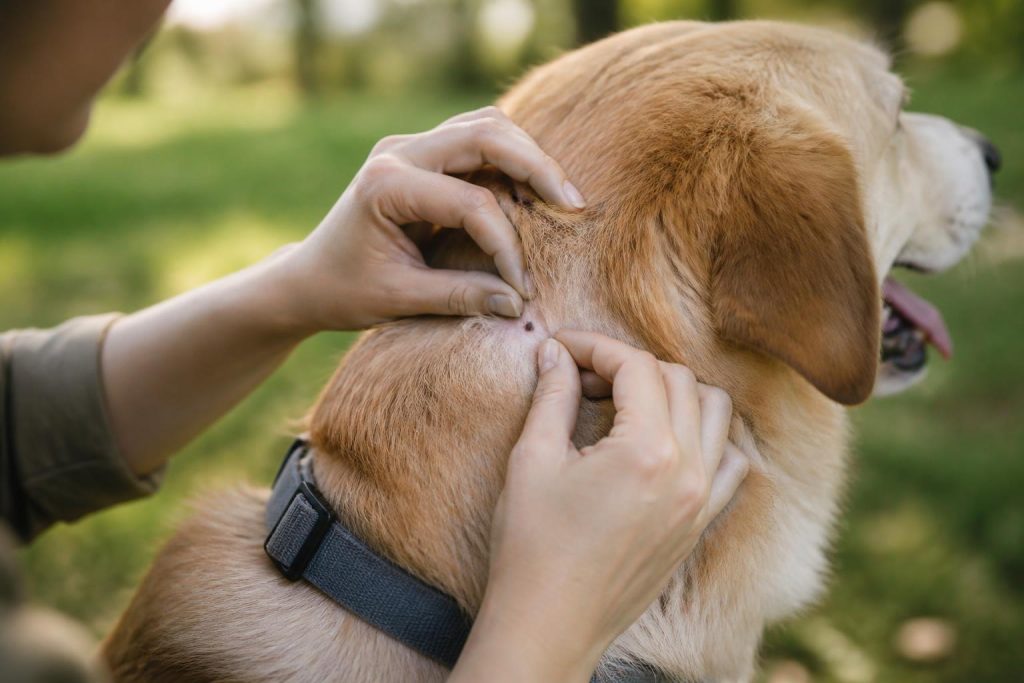
People often use this phrase in two different ways. Sometimes a tick is still attached to the skin, but the fur makes it look hidden. Other times the skin is swollen around the bite, so the tick or bite site seems to sit “under” the surface. A tick does not usually burrow deeply into the skin, but its mouthparts can stay attached while the body sits on top of the skin.
When checking, part the fur all the way down to the skin line. The most common hiding places are around the ears, neck, armpits, between the toes, under the collar, and around the tail base.
How to Tell a Tick from a Skin Lump
A tick and a skin bump can look similar at first, especially in long-haired dogs. Use the table below as a practical comparison.
| Feature | More likely a tick | More likely a skin bump |
|---|---|---|
| Shape | Oval or rounded body that sits above the skin | Usually part of the skin surface |
| Texture | May feel firm, smooth, and sometimes movable | May feel like a fixed lump or raised area |
| Legs | Small legs may be visible near one end | No legs visible |
| Color | Brown, gray, tan, or dark depending on species and feeding stage | Often matches the dog’s skin or hairless skin color |
| Attachment | May appear anchored in one spot | Not attached like an insect |
If you need a visual reference for what ticks can look like on a pet, see Engorged Tick On Dog: Complete Guide and Dog Tick Bite Photos: How to Identify It Clearly.
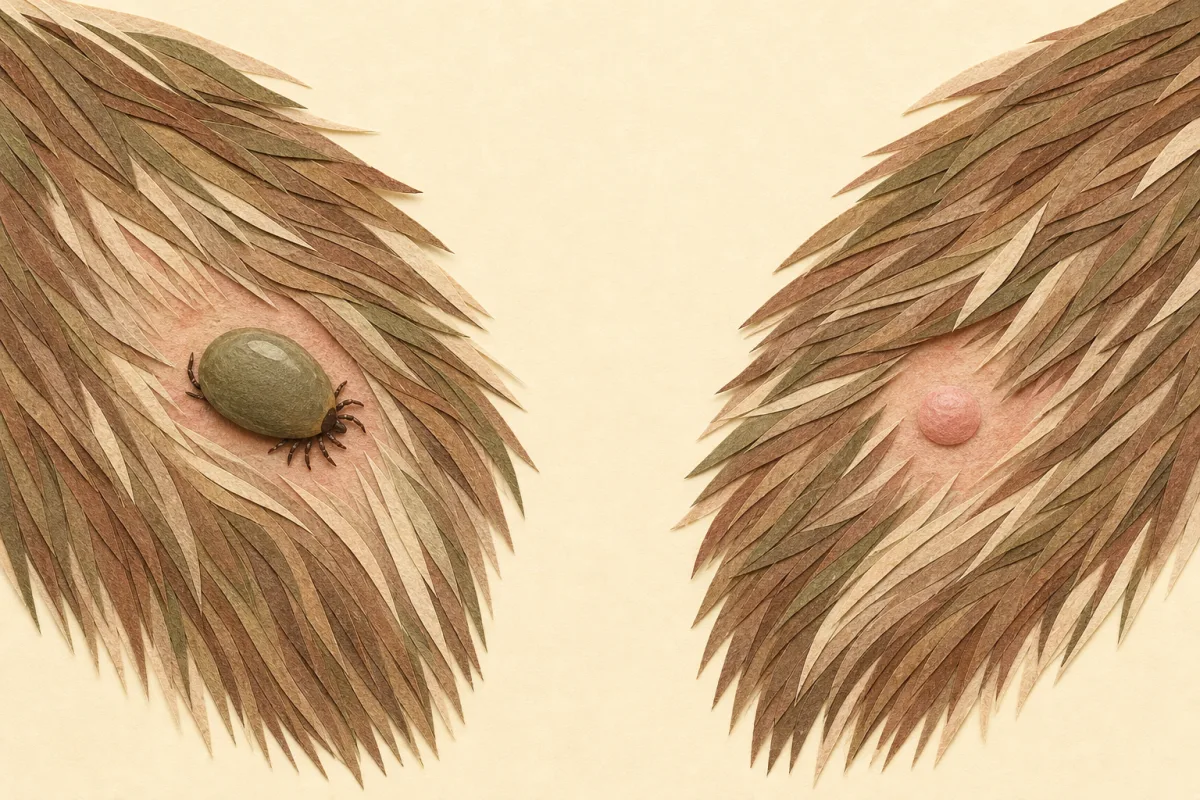
Photo Clues That Suggest a Tick
Photos can help when the object is tiny or partly hidden by fur. A tick is more likely if you can see a small oval body, a darker head end, or tiny legs near the attachment point. An engorged tick may look like a swollen gray or brown bead. A fresh bite site may also show mild redness or a small bump nearby.
If you are trying to compare what you see with common tick features, these pages can help: Tick What Does It Look Like: Complete Guide and Tick Markings: Complete Guide.
Tip: take a clear close-up photo in bright natural light, then another wider photo that shows where the spot is located on the dog. Both images can be useful when you are trying to identify the object later.
What to Do If You Find One
If the object looks like a tick and is attached, the safest next step is usually careful removal with fine-tipped tweezers or a tick-removal tool, if you know how to do it correctly. Grasp the tick as close to the skin as possible and pull straight outward with steady pressure. After removal, clean the area gently and wash your hands.
Do not twist, crush, burn, or coat the tick. Do not keep checking the spot by squeezing it repeatedly. If mouthparts remain in the skin or you are unsure whether the tick was fully removed, a veterinarian can advise you on the next step.
- Keep your dog calm and still.
- Use good lighting and part the fur fully.
- Save the tick in a sealed bag or container if your vet wants to see it.
- Monitor the bite area for redness, swelling, or discharge.

When to Seek Veterinary Help
Contact a veterinarian if the spot becomes very red, hot, swollen, painful, or starts oozing. You should also seek help if your dog seems tired, has a fever, is limping, is not eating normally, or develops any unusual symptoms after a tick exposure. These can have many causes, so it is important not to assume the tick is harmless.
Get veterinary guidance sooner if the tick is attached near the eye, inside the ear, or in another hard-to-reach area. If the dog is very young, elderly, immunocompromised, or has a history of tick-borne illness, prompt advice is especially important.
Common Mistakes to Avoid
- Do not assume every lump is a tick.
- Do not pull without first seeing where it is attached.
- Do not use oil, alcohol, or heat to make it let go.
- Do not ignore a bite site that becomes irritated over time.
- Do not rely on memory alone—take a photo for comparison.
How Tick Identifier Can Help
If you are comparing a spot on your dog with tick photos, the Tick Identifier app can help you organize and review images while you decide whether the object looks like a tick, a bite site, or a skin bump. It is a simple way to keep a record of what you saw before or after removal.
For more identification support, you can also browse the site’s visual guides, including Identify Tick by Photo and Look for Ticks: Complete Guide.
FAQ
Can a tick really be under a dog’s skin?
Usually, no. A tick typically attaches to the skin rather than burrowing deeply under it. However, fur, swelling, and scabbing can make it look like the tick is under the skin.
How do I know if it is a tick or a skin tag?
A tick often has a distinct oval body and may show tiny legs. A skin tag usually looks like part of the skin and does not have legs. When in doubt, compare it with clear photos and ask a vet.
Should I try to remove a tick that seems embedded?
If it is attached to the skin and you can reach it safely, careful removal is usually possible. If it is in a sensitive area, seems deeply stuck, or your dog is painful, veterinary help is the safer choice.
What should I watch for after removing a tick?
Watch the skin for swelling, redness, scabbing, or discharge, and watch your dog for changes in energy, appetite, or movement. If anything seems off, contact a vet.
What if I’m not sure it is a tick at all?
Take a clear photo, part the fur well, and compare it with trusted visual references. If the spot changes, bleeds, or stays irritated, have a veterinarian examine it.
Ticks can be easy to miss, especially in thick coats. A careful check, a good photo, and a calm next step often make the difference. If you want a simple way to review what you found, try the Tick Identifier app and keep your tick checks organized.
Try the Tickidentifier app
Use the app when you want a faster photo-based check before comparing details manually.