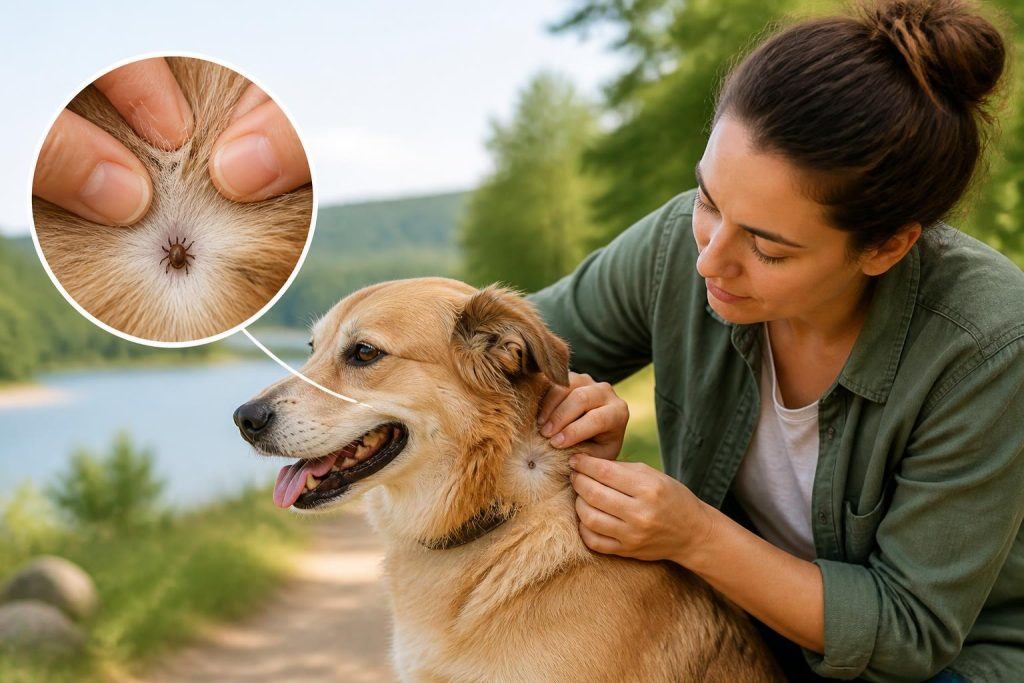
Tick Identification Guide
Dog Tick Size: What to Expect and How to Spot It
Learn how big dog ticks can be at different stages, how to spot them on fur and skin, and when to get help after finding one.
If you’re trying to judge dog tick size, the short answer is that it can vary a lot. A tick may be tiny enough to look like a dark speck, or large enough to be easy to feel in your dog’s coat. Size depends on the tick’s life stage and whether it has fed recently.
This guide focuses on practical identification: what dog ticks look like at different sizes, how to spot them on fur and skin, and when it’s a good idea to get extra help. For safer checking habits and common hiding spots, you can also review Tick Check: How to Spot Ticks on Skin, Clothing, and Pets.
Safety note: This article is for identification and prevention only. It does not diagnose illness. If your dog seems unwell, or if you are worried about a bite reaction, contact a veterinarian.
How big is a dog tick?
There is no single size for a dog tick. In general, ticks can be:
- Very small: poppy-seed-sized or smaller-looking when unfed
- Easy to miss: flat and dark, blending into fur
- Noticeably larger: after feeding, when the body swells and becomes rounder
That’s why size alone is not enough to identify a tick. A small tick may still be attached, and a larger one may simply be engorged. If you’re comparing what you found to photos, the article Tick What Does It Look Like: Complete Guide can help you focus on shape, legs, and body features rather than size alone.
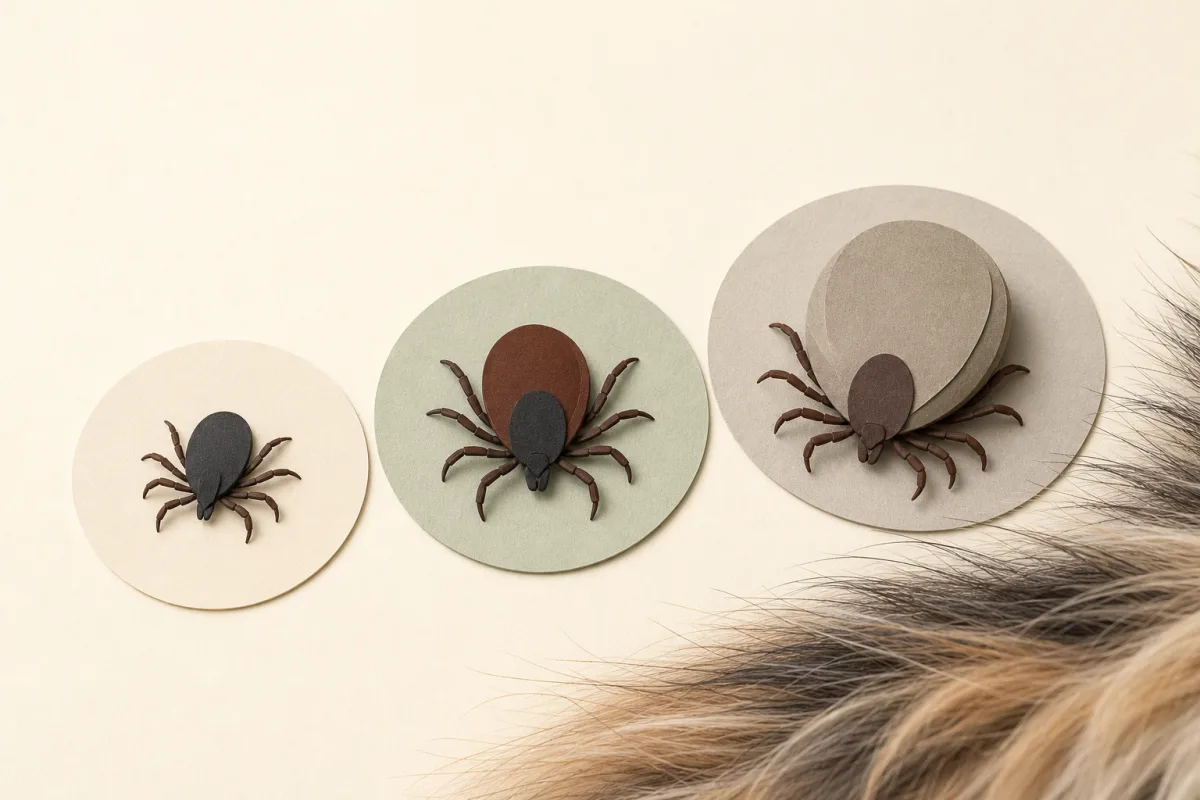
Dog tick size by stage and feeding state
The table below shows how a tick’s appearance can change. Exact measurements vary by species, so think of this as a practical field guide rather than a lab reference.
| Tick stage or condition | Typical appearance | What it means for checking your dog |
|---|---|---|
| Unfed nymph or young tick | Tiny, flat, often dark or brown | Hard to spot in thick fur; slow, careful inspection helps |
| Unfed adult tick | Small but more visible than a nymph; oval body with legs near the front | May look like a small bump or seed on the coat |
| Partially fed tick | Rounder body, more raised from the skin | Easier to feel with fingers during a tick check |
| Engorged tick | Plumper, enlarged, and often lighter or grayish-looking | Needs prompt attention because it has fed on the host |
For a more detailed look at swollen ticks, see Engorged Tick On Dog: Complete Guide.
What dog ticks look like up close
When you’re checking for ticks, shape and placement matter more than size alone. A tick attached to a dog often looks like a small, fixed bump. It may not move easily if you touch the fur around it.
Common visual clues include:
- A tiny dark or brown body
- Legs clustered near one end
- A flat shape when unfed
- A swollen, oval body after feeding
- Attachment close to the skin rather than sitting loose on top of the coat
If you want a practical reference for where ticks tend to show up, Where Ticks Are Found: A Practical Guide to Common Hotspots is useful for checking high-risk areas on pets and people.
Photo clues: how to tell a tick from dirt or a skin bump
Dog owners often mistake ticks for dirt, a scab, a small skin tag, or a bit of debris stuck in fur. Photos can help, but they work best when you compare multiple clues together.
- Tick: usually fixed in place, with a defined body and possible leg movement
- Dirt or mud: may brush away or crumble
- Scab: part of the skin, not a separate attached body
- Skin tag or growth: often flesh-colored or shaped differently from a tick’s rounded body
If the spot is attached under the fur and you’re not sure what you’re seeing, the guide Tick Under a Dog’s Skin: What It Looks Like and What to Do Next can help you compare a tick to other skin-level bumps.
Where dog ticks are commonly found on the body
Ticks often attach where the coat is warm, thin, or hard to inspect quickly. Check these places carefully:
- Around the ears and under the collar
- Between the toes
- Under the front legs and around the armpits
- Groin and belly areas
- Around the eyelids and muzzle
- Along the neck and chest
A consistent routine matters more than a quick glance. If you’re building a repeatable habit, Look for Ticks: Complete Guide can help organize a safer check from head to tail.
What to do if the tick looks large
A larger tick on a dog is often simply a tick that has fed. That does not mean you should ignore it. A swollen tick may be easier to see, but it still needs careful handling.
Use these steps:
- Keep your dog calm and still.
- Part the fur so you can see the attachment point.
- Avoid squeezing the body of the tick.
- If you are removing it yourself, use a method recommended by a veterinarian or trusted animal-health source.
- Watch the area afterward for irritation.
If you are trying to identify whether a spot is a tick bite after removal, the photo guide Dog Tick Bite Photos: How to Identify It Clearly may help you compare what normal healing can look like.
When to seek veterinary help
Size alone does not tell you whether a tick has caused a problem. Seek veterinary advice if:
- Your dog seems tired, painful, feverish, or off food after a tick exposure
- The bite area becomes very red, swollen, or starts draining
- You cannot remove the tick safely
- The tick is attached near the eye, mouth, or inside the ear
- You think multiple ticks may be present
It can also help to keep notes or take a photo before removal so you can reference the spot later. For general tick appearance comparison, you may also find Tick Bite Photos: How to Identify It Clearly useful.
How to make dog tick checks easier
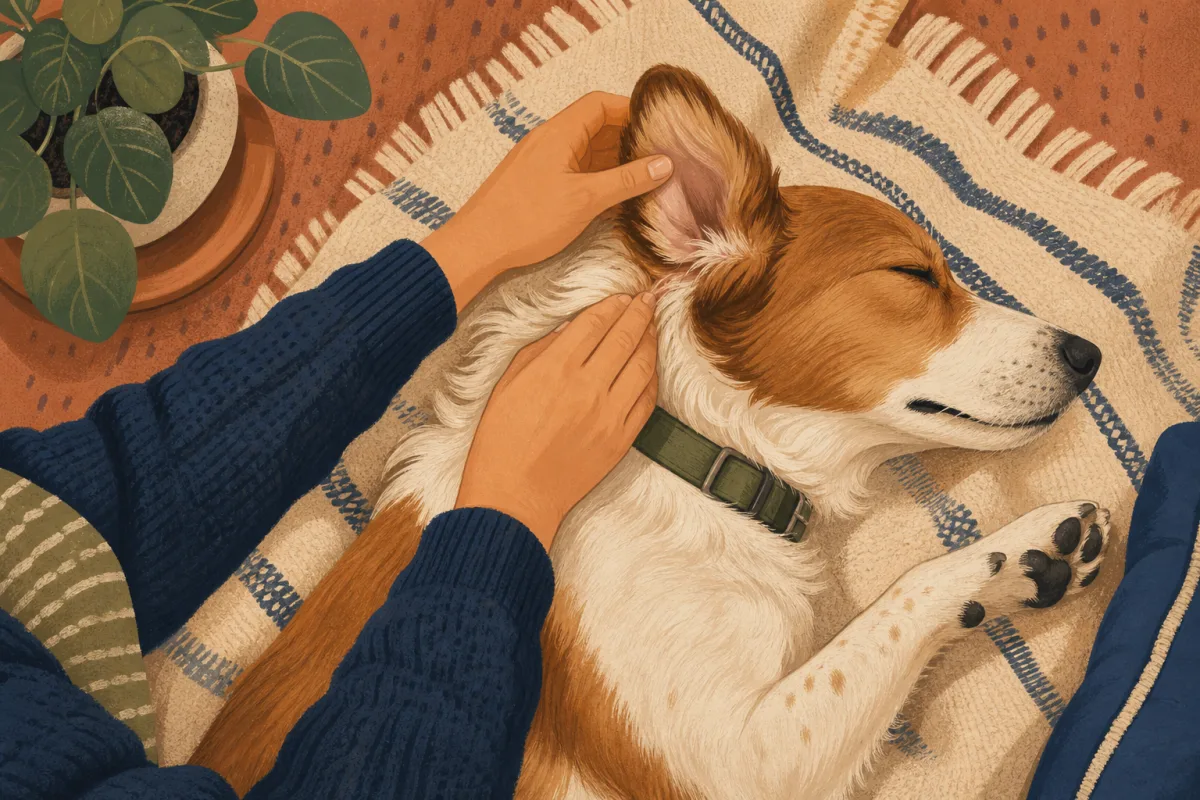
A good tick check is often the fastest way to catch a tick before it becomes hard to spot. Try to check your dog after time outdoors, especially in grassy, brushy, or wooded areas.
- Run your hands slowly through the coat
- Use bright light
- Check the hidden areas first
- Look for any new bump that feels fixed to the skin
- Repeat checks regularly during peak tick season
If you want a broader view of tick identification on pets and clothing, the guide Tick Identification Chart: How to Compare Ticks by Photo may be helpful as a visual reference.
FAQ
How small can a dog tick be?
Very small. Some ticks are tiny enough to resemble a speck, especially before feeding. Because of that, size is not a reliable way to rule out a tick.
Do all dog ticks get big after feeding?
Many do swell after feeding, which makes them easier to spot. But a tick may still be attached even if it does not look very large yet.
Can I identify a tick by size alone?
No. Shape, leg placement, and whether the object is attached to the skin are usually more helpful than size by itself.
What if I think a tick is embedded under the skin?
Sometimes a bump can look embedded when it is actually a tick attached close to the skin. If you are unsure, compare it carefully with photo guides and ask a veterinarian if needed.
Is there a tool that can help me check?
The Tick Identifier app can help support your review process when you want a quick, visual comparison. You can find it here: Tick Identifier app on the App Store.
Bottom line
Dog tick size can range from nearly invisible to obviously swollen, so the safest approach is to check for shape, attachment, and location rather than relying on size alone. A careful tick check, plus a good reference photo guide, can help you spot ticks earlier and respond appropriately.
If you want another layer of support, try the Tick Identifier app before or after your next outdoor walk: download it here.
Try the Tickidentifier app
Use the app when you want a faster photo-based check before comparing details manually.