Deer Tick Identification: What to Look For
Learn deer tick identification basics, how blacklegged ticks can look in photos, and what clues to compare before taking next steps.

Important: Ticky is an educational photo inspection tool. It does not diagnose tick species, disease risk, or medical conditions. If a tick was attached to a person or pet, follow official guidance and contact a medical or veterinary professional when needed.
What Is a Deer Tick?
The term deer tick is commonly used for the blacklegged tick in the eastern United States. CDC materials list the blacklegged tick, Ixodes scapularis, as widely distributed across the eastern United States and note that nymphs and adult females are stages most likely to bite humans.
Deer tick identification by photo can be difficult because size, color, and body shape change by life stage and feeding status. A flat unfed tick may look very different from an engorged tick, and a nymph can be much smaller than an adult.
Small dark body
Look for a compact oval shape with visible legs and a dark shield area.
Reddish-brown tones
Some deer ticks can show dark and reddish-brown contrast, especially adult females.
Life stage matters
Nymphs, adults, and engorged ticks can look very different in photos.
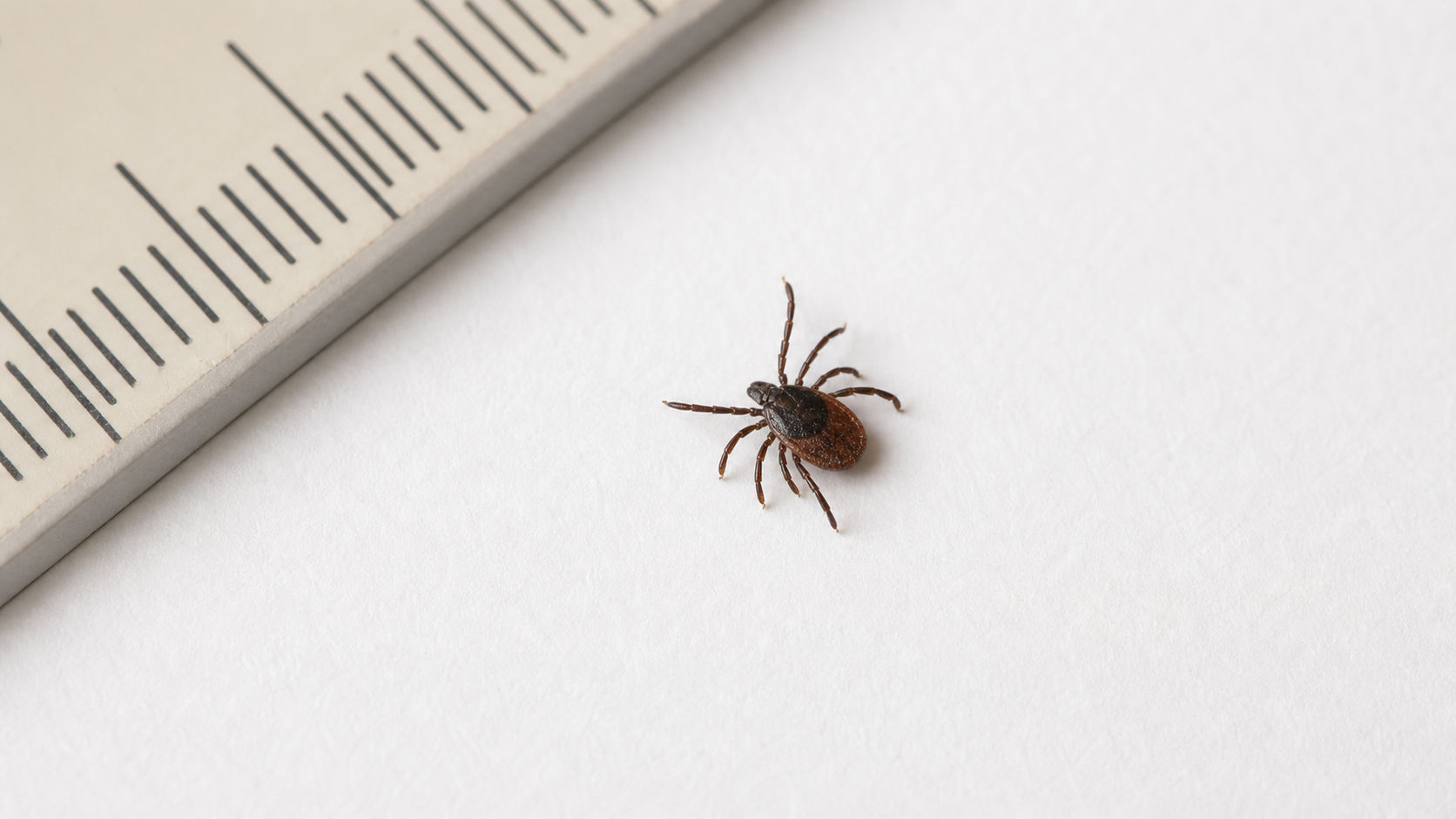
Deer Tick Identification Clues
Start with the body outline. Deer ticks are hard ticks, so they have a compact body shape and visible legs. Adult females may appear dark near the front with a reddish or orange-brown back portion, while males can look darker overall. Nymphs are much smaller and may appear as a tiny dark speck.
Photo quality matters. Shadows, fur, fabric, grass, and phone focus can make a tick look darker, larger, or less detailed than it really is. If the tick is no longer attached, use a plain light background and a ruler or coin for scale.
Deer Tick vs Other Common Ticks
Do not rely on one visual clue to separate deer ticks from other ticks. A lone star tick adult female can have a distinct pale dot, while dog ticks may have more obvious patterned markings. Deer ticks are often compared by their smaller size, dark legs, and darker shield area, but a blurry photo can hide those differences.
Location also helps. The CDC says blacklegged ticks are widely distributed across the eastern United States, while western blacklegged ticks are found along the Pacific coast, especially northern California. Local tick activity can vary, so a photo should be interpreted with your region and exposure history in mind.
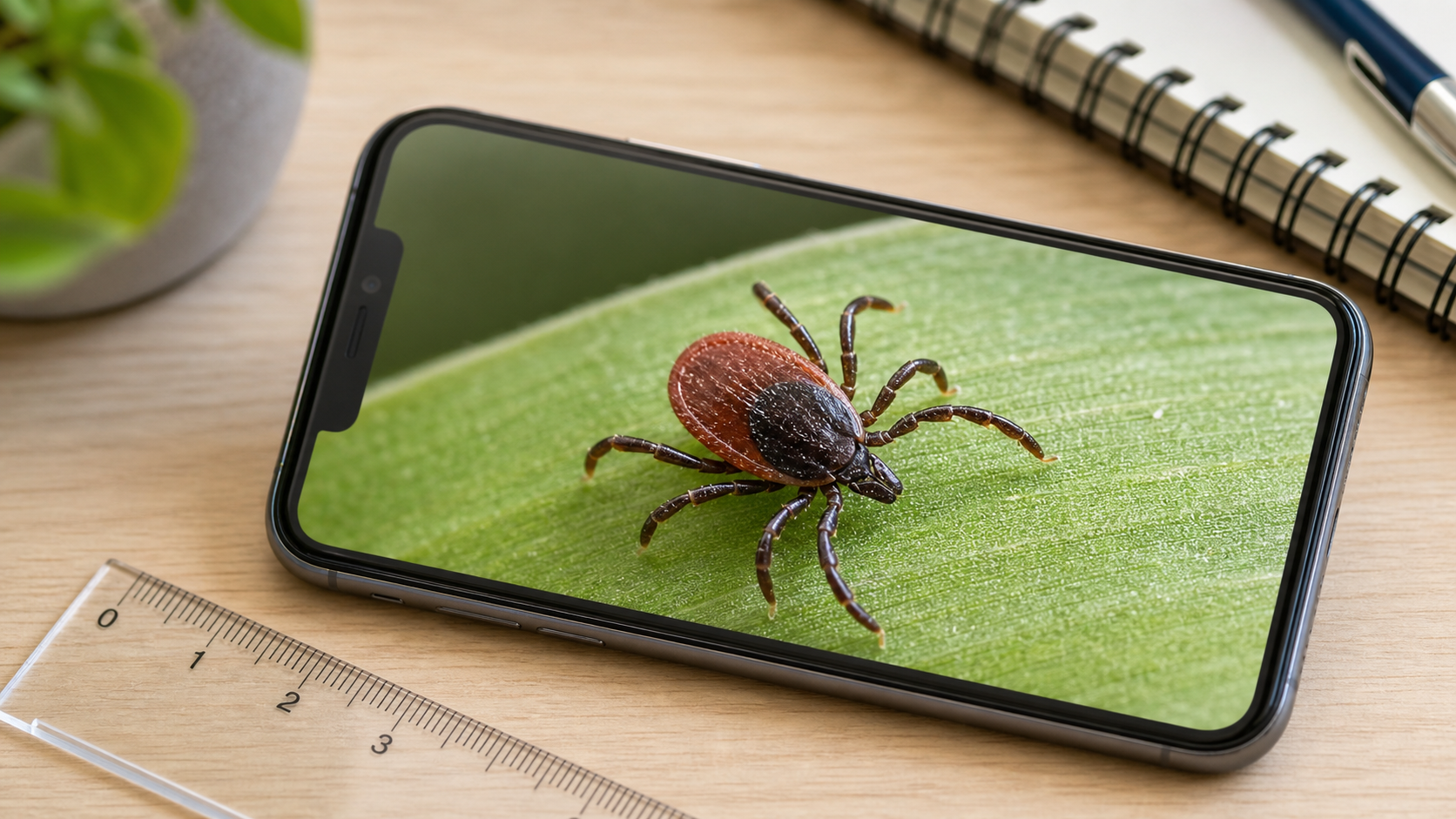
How to Photograph a Possible Deer Tick
For better deer tick identification, take a sharp photo in bright light. If the tick is not attached, place it on white paper or another plain background. Add a ruler, coin, or familiar object beside it so size can be judged later.
Take more than one angle if possible. A top-down photo can show the back and markings, while a side photo can show whether the body is flat or engorged. If your phone will not focus, move slightly farther away and crop the image later.
Use Ticky to Inspect Tick Photos
Tick Detector Checker – Ticky can help you inspect a possible deer tick photo more carefully. Visual filters and contrast modes may make it easier to compare small details such as legs, body outline, color contrast, and whether the tick looks engorged.
The app does not identify disease risk or replace expert advice. It is useful for checking photo details, saving a clearer record, and comparing your image with educational tick guides.
Inspect tick photos faster
Use Ticky to zoom in, adjust contrast, and compare details in possible deer tick photos.
When a Deer Tick Photo Is Not Enough
A photo can help with visual comparison, but it cannot tell you whether a tick transmitted a pathogen. The CDC page on where ticks live notes that tick presence in a region does not automatically mean disease transmission in that area; risk depends on multiple factors.
If a tick was attached, remove it promptly if you can do so safely. The CDC tick bite guidance recommends clean fine-tipped tweezers, grasping close to the skin, and pulling upward with steady pressure. Contact a healthcare provider if you develop a rash, fever, aches, or other concerning symptoms after a bite.
When to get medical advice. These steps match the official guidance on the NHS Lyme disease page. See a doctor if you cannot remove the whole tick, if the bite area develops an expanding circular rash, or if you get a fever, headache, aching muscles or extreme tiredness in the weeks after a bite. Tell them when and where you were bitten — that changes what they test for.
Deer Tick Identification FAQ
Can I identify a deer tick by photo?
A clear photo can help you compare size, shape, legs, color, and markings. It is useful for documentation and visual comparison, but it does not replace expert identification or medical advice.
Is a deer tick the same as a blacklegged tick?
In many U.S. contexts, deer tick commonly refers to the blacklegged tick, Ixodes scapularis. Regional names can vary, so official local resources may use more specific terms.
What does an engorged deer tick look like?
An engorged tick may look larger, rounder, and lighter than an unfed tick. Feeding can change the body shape, which makes photo comparison harder.
Can Ticky diagnose Lyme disease risk?
No. Ticky is an educational photo inspection app. Contact a healthcare provider for symptoms, disease risk, testing, or treatment decisions.