Dog Tick Identification: How to Check Dogs for Ticks
Use this dog tick identification guide to check common tick hiding spots, take clearer tick photos, and decide when to ask a veterinarian for help.
Important: Ticky is an educational photo inspection app. It does not diagnose tick species, disease risk, or pet health conditions. If you find a tick attached to your dog, remove it promptly if you can do so safely, and contact your veterinarian if you are unsure what to do.
Dog Tick Identification: Where to Check First
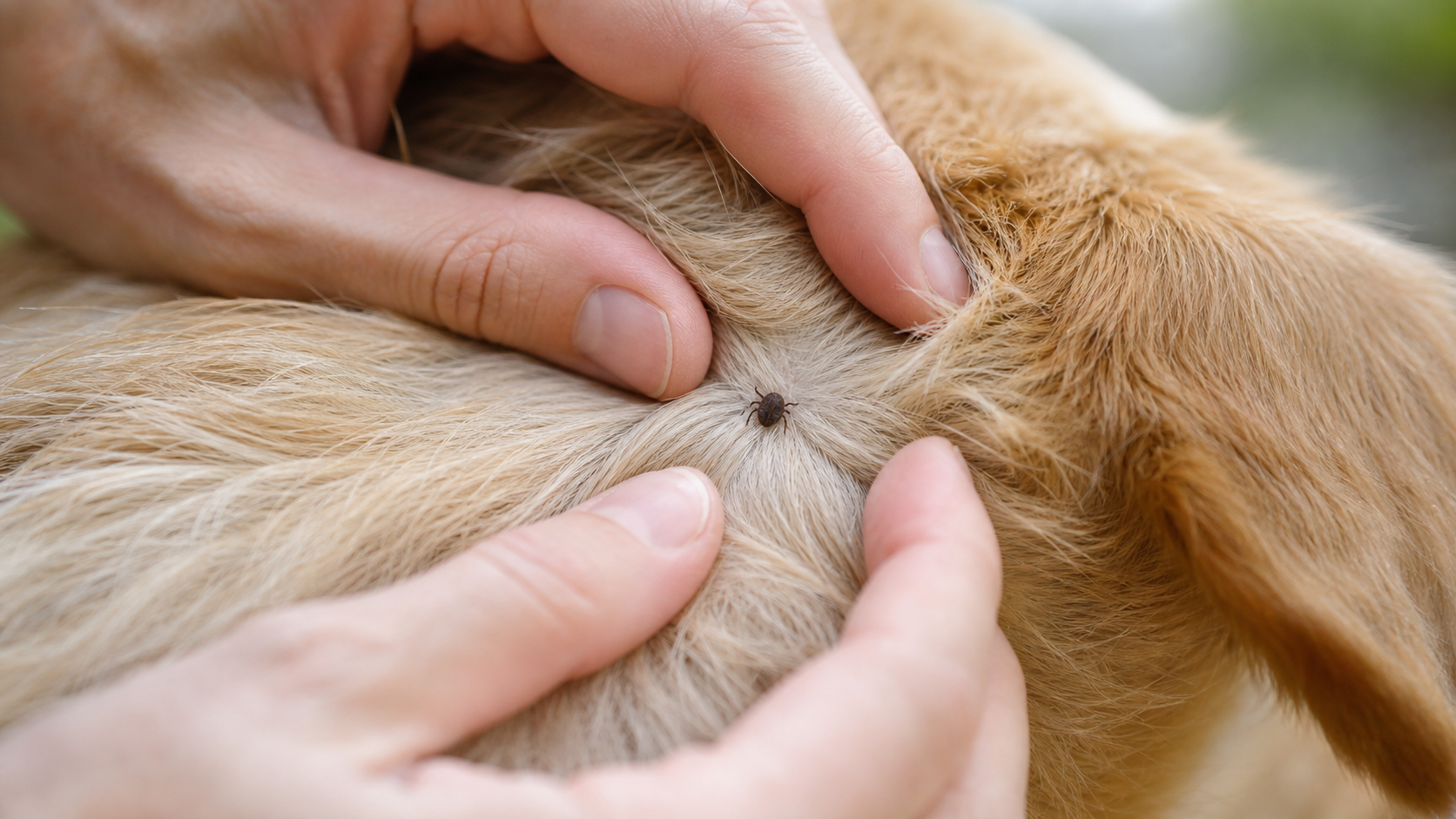
Dog tick identification starts with a careful tick check. Ticks can be small, flat, and easy to miss in thick fur. After walks, hikes, yard time, or travel through grass and brush, inspect your dog slowly with your fingers and eyes.
Pay special attention to warm and hidden areas where ticks often attach. A clear photo can help you compare what you found later, especially if the tick is tiny, partly hidden, or hard to see against fur.
Ears and around the head
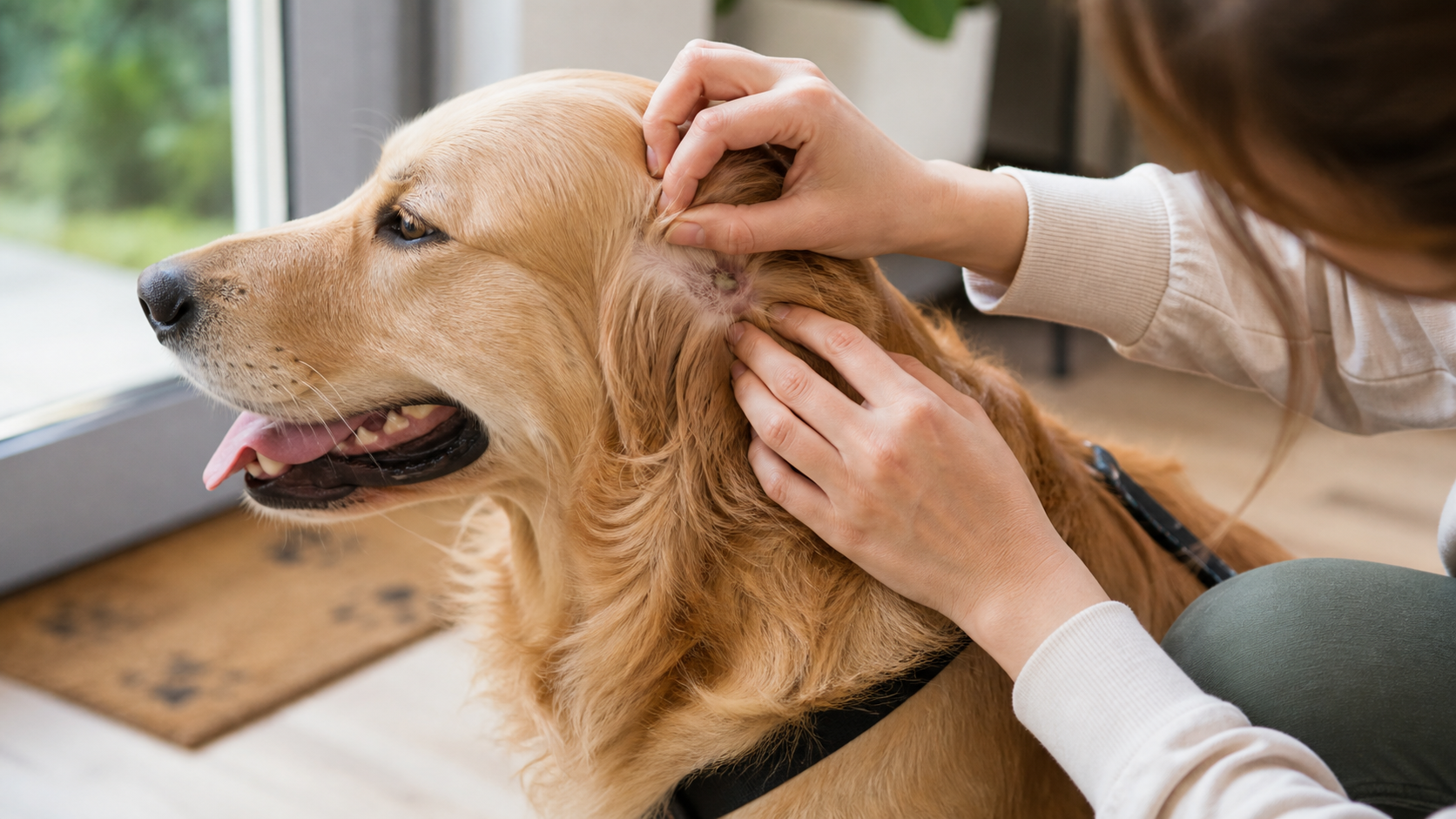
Check behind the ears, around the eyes, under the collar, and along the neck.
Legs and paws
Look between toes, around paw pads, and where the legs meet the body.
Belly and chest
Part the fur and check the underside, chest, and armpit areas carefully.
Tail and back
Run your hands along the back, tail base, and any thick or matted fur.
How to Tell If a Speck on Your Dog Might Be a Tick
A tick may look like a small dark seed, a flat oval spot, or a swollen round bump if it has been feeding. In a photo, look for a compact body, visible legs, and a shape that appears attached to the skin rather than resting on top of the fur.
Dog tick identification is harder when the tick is very small, covered by fur, or engorged. Lighting can also change how color appears. If you are not sure whether the spot is a tick, flea, scab, burr, or debris, take a clear photo and compare several clues together.
How to Photograph a Tick Found on a Dog
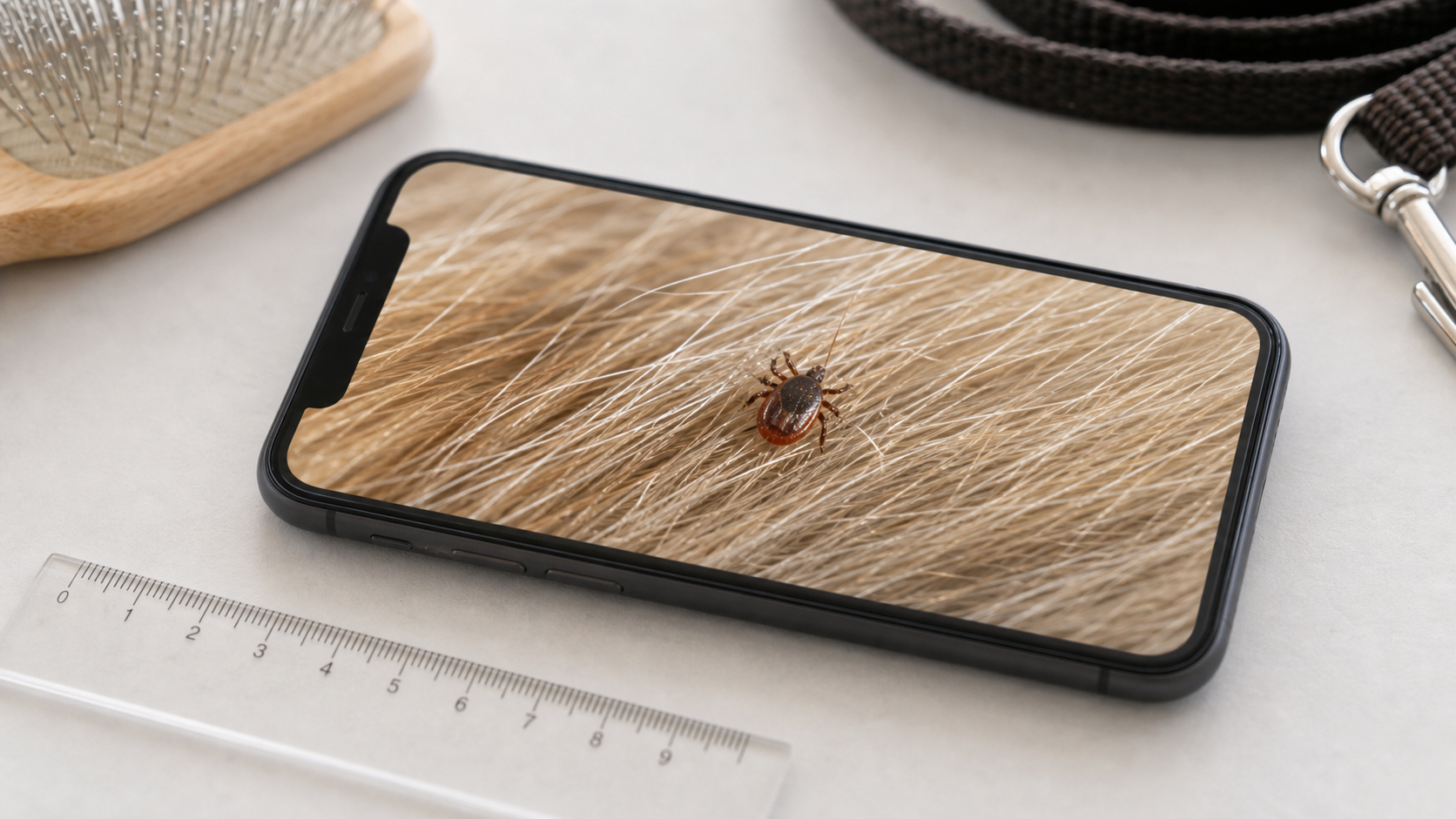
For better tick ID by photo, use bright light and keep the camera steady. If the tick is no longer attached, place it on a plain light surface and add a ruler, coin, or other scale reference. Take one close photo from above and another from the side.
If the tick is attached to your dog, do not delay removal just to get a perfect picture. Take a quick photo if possible, then remove the tick carefully or ask your veterinarian for help.
Use Ticky to inspect dog tick photos
Open a tick photo in Tick Detector Checker – Ticky to zoom in, compare small details, adjust contrast, and keep a clearer visual record.
What to Do If You Find a Tick on Your Dog
If you find a tick on your dog, remove it as soon as possible if you can do so safely. Use fine-tipped tweezers or a tick removal tool, grasp the tick close to the skin, and pull upward with steady pressure. Avoid crushing the tick body.
After removal, clean the area and watch your dog for changes. Contact a veterinarian if the tick is difficult to remove, the area looks irritated, your dog seems unwell, or you have questions about tick prevention products.
Dog Tick Identification FAQ
Can I identify a dog tick from a photo?
A clear photo can help you compare size, body shape, color, legs, and markings. It is useful for documentation and visual comparison, but it does not replace veterinary advice.
Where do ticks usually hide on dogs?
Common places include around the ears, under the collar, between toes, around the tail base, under the legs, and along the belly or chest.
Should I save a tick after removing it from my dog?
You can save the tick in a sealed bag or container with the date and location where it was found. This may be useful if you later speak with a veterinarian.
Can Ticky diagnose tick diseases in dogs?
No. Ticky is for educational photo inspection only. Talk to your veterinarian about symptoms, disease risk, testing, and tick prevention.