
Tick Identification Guide
Where Ticks Are Found: A Practical Guide to Common Hotspots
Learn where ticks are found on your body, in yards, and on pets, plus what they look like, how to check for them, and when to seek help.
Safety note: This guide is for tick spotting and prevention only. It is not a diagnosis. If you think a tick may be attached to skin, follow trusted removal guidance and contact a healthcare professional if you are unsure what to do.
If you are wondering ticks are found where, the short answer is: in places where they can wait for a host. That usually means grassy, brushy, wooded, and leaf-litter areas outdoors, but they can also end up on clothing, pets, and even indoors after being carried in. Knowing the most common tick hotspots can help you check faster and reduce the chance of a bite.
This article covers where ticks tend to live, where they are commonly found on the body, what tick signs to look for, and when it is wise to seek medical or veterinary help. For a step-by-step check, you can also use the Tick Check guide.
Where ticks are commonly found outdoors
Ticks do not jump or fly. They usually wait in vegetation and latch onto a passing person or animal. The places below are among the most common areas where ticks are found.
| Place | Why ticks are often there | What to watch for |
|---|---|---|
| Tall grass | Ticks rest on blades and reach for passing hosts | Ticks on shoes, socks, pant legs |
| Brush and shrubs | Dense foliage gives ticks cover and access to animals | Ticks on sleeves, shoulders, pets |
| Leaf litter | Moist ground cover helps ticks stay active | Ticks near ankles, cuffs, and lower legs |
| Wooded edges | Transition zones bring wildlife and people together | Ticks after hiking or yard work |
| Overgrown yards | Untrimmed vegetation creates tick habitat | Ticks after gardening or playing outside |
Ticks are especially likely to be found in areas with moisture, shade, and animal traffic. Public health sources such as the CDC note that wooded, brushy, and grassy places are higher-risk environments, especially during warmer months and in regions where ticks are active.
Where ticks are found on the body
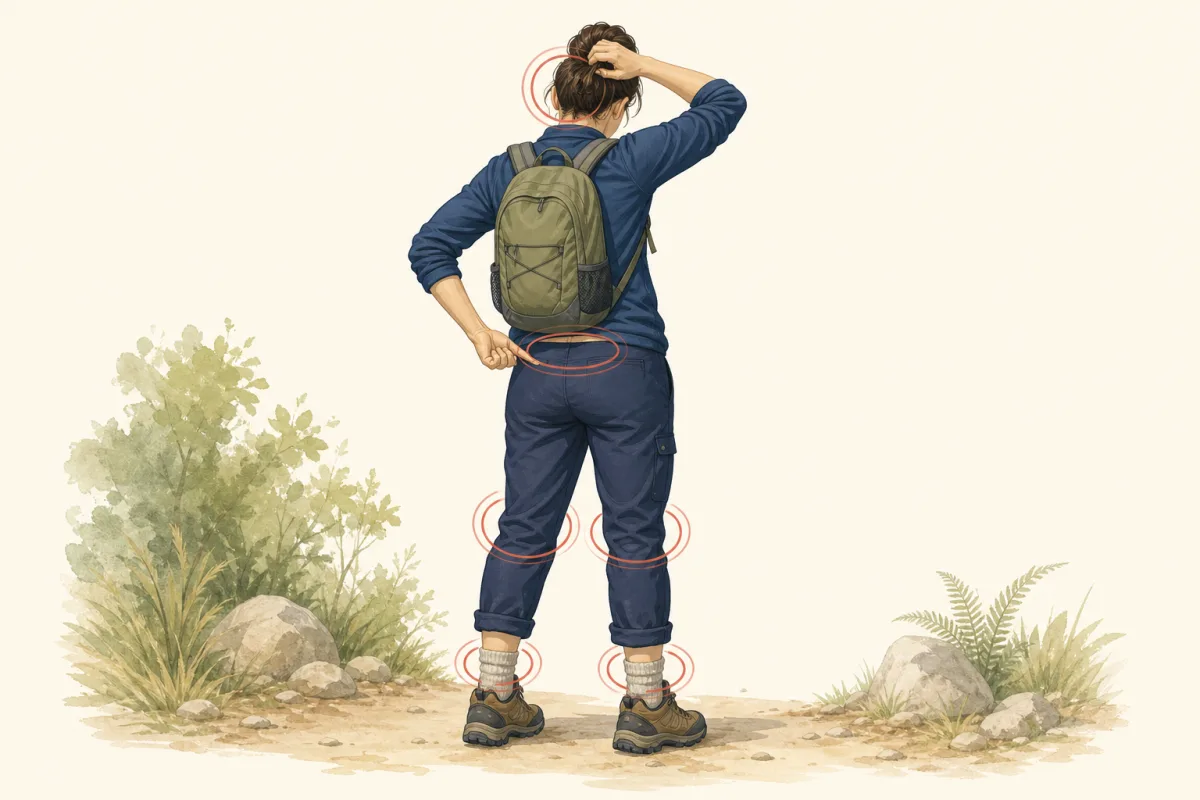
After a person or pet brushes past tick habitat, ticks often move to warm, protected spots. If you are checking yourself or someone else, focus on places where ticks can hide easily.
- Hairline and scalp
- Behind the ears
- Under the arms
- Around the waist and waistband
- Inside the belly button
- Behind the knees
- Between the legs or groin area
- Around socks, ankles, and shoe lines
On dogs and other pets, ticks are often found around the ears, neck, collar area, armpits, between toes, and under the tail. If you want more pet-specific clues, see Engorged Tick On Dog: Complete Guide and Dog Tick Species: Complete Guide.
Common places to check first
| Target area | Why it matters | Quick check tip |
|---|---|---|
| Scalp and hairline | Ticks can be hard to see in hair | Use fingertips and a comb in sections |
| Waistline and waistband | Tight clothing can trap ticks | Check after hiking or yard work |
| Ankles and socks | Ticks often climb from the ground up | Inspect cuffs and inside socks |
| Behind knees | Warm, folded skin is a common hiding place | Look carefully with good light |
| Pet ears and neck | Fur and skin folds conceal small ticks | Part the coat and feel gently |
What ticks can look like when you find them
Many people search for ticks are found where because they are trying to figure out whether a tiny dark spot is actually a tick. In general, ticks can look like a small oval or round body with legs near the front. Their appearance changes depending on life stage and whether they have fed.
If you need a visual overview, compare what you see with Tick What Does It Look Like: Complete Guide or Tick Markings: Complete Guide. For clearer image-based spotting help, Tick Identification Chart: How to Compare Ticks by Photo may be useful.
Warning: A small dark bump is not always a tick. Dirt, scabs, skin tags, and other insects can look similar at a glance. If you are unsure, inspect closely in bright light rather than guessing.
Some clues that often help:
- Legs: Ticks have legs, though they can be hard to see when very small.
- Shape: Often oval or rounded rather than flat like a speck of dirt.
- Attachment: An attached tick may seem fixed to the skin.
- Engorgement: After feeding, a tick can look larger and more swollen.
For bite-related image references, you may also find Tick Bite Photos: How to Identify It Clearly helpful when comparing a suspected bite area.
Photo clues that help with identification
Photos are useful when you cannot inspect a tick directly, but the angle and lighting matter a lot. Good photos can help show shape, size, body color, and whether the tick is attached.
Try taking a few images from different distances:
- Take one close photo for detail.
- Take one medium photo to show the spot on skin or fur.
- Use a plain object for scale if possible, without touching the tick directly.
If you are photographing a suspected tick on a dog, good light and fur parting make a big difference. For more examples, see Dog Tick Bite Photos: How to Identify It Clearly. If the tick is tiny and difficult to spot, Nymph Tick Identification may also help you understand why smaller ticks are easy to miss.

When to seek medical or veterinary help
Finding a tick is not always an emergency, but there are situations where help is appropriate. It is a good idea to contact a healthcare professional if:
- The tick may have been attached for a long time and you are unsure how long it was there
- You cannot remove the tick safely or part of it may have remained in the skin
- There is increasing redness, swelling, pain, or drainage around the area
- Symptoms appear after a bite, such as fever, rash, headache, or feeling unwell
- A tick is found near the eye, inside the ear, or another difficult location
For pets, contact a veterinarian if a tick is deeply attached, the skin becomes irritated, or your dog seems unwell after a bite. If you are checking after outdoor time, it can help to review Look for Ticks: Complete Guide so you know where to inspect before a problem starts.
Warning: If you remove a tick, avoid crushing it with bare fingers. Wash your hands afterward and monitor the area for changes.
Simple prevention habits that reduce risk
Because ticks are found where they can easily reach hosts, prevention focuses on making your clothing, skin, and yard less inviting.
- Wear long sleeves and long pants in brushy areas
- Choose light-colored clothing so ticks are easier to spot
- Tuck pants into socks during hikes or yard work
- Stay on cleared paths when possible
- Check pets after outdoor time, especially around ears and legs
- Inspect clothing, gear, and shoes before coming indoors
For a practical next step, many readers use the Tick Identifier app to support quick spot-checks and comparison while they review what they found. You can learn more here: Download Tick Identifier on the App Store.
FAQ
Ticks are found where most often?
They are most often found in grassy, brushy, wooded, and leaf-litter areas, especially where animals pass through. They can also be found on clothing, pets, and skin after outdoor activity.
Where do ticks hide on people?
Common hiding spots include the scalp, behind the ears, under the arms, around the waist, behind the knees, and near ankles or sock lines.
Can ticks be found indoors?
Yes. Ticks can be brought inside on clothing, pets, backpacks, or shoes. They are more often found indoors after someone has been in a tick habitat outside.
What should I do if I am not sure a spot is a tick?
Use bright light, compare it with trusted photos, and look for legs or signs of attachment. If you still cannot tell, a clear photo can help you review it more carefully or discuss it with a professional.
Are ticks always in wooded areas?
No. Wooded areas are a common habitat, but ticks can also be found in tall grass, shrubs, leaf litter, and overgrown yards.
If you want a simple way to compare what you see and keep your tick checks organized, the Tick Identifier app can help you review photos and spot-check more confidently. Visit the App Store link above to get started.
Try the Tickidentifier app
Use the app when you want a faster photo-based check before comparing details manually.