Tick Identification Guide
What Does a Tick Look Like? Size, Shape, and Color
Learn what ticks look like, how to spot a tick bite, and how to check pets and people with clear identification tips, photo clues, and safety guidance.
If you’re searching for tick what does it look like, you’re probably trying to identify something small, dark, and easy to miss. Ticks can look like tiny moving dots, flattened oval bumps, or seed-like specks depending on their size and whether they have fed. On people and pets, they are often confused with dirt, freckles, scabs, or small skin tags.
This guide explains what ticks look like in practical terms, how a tick bite what does it look like question differs from finding the tick itself, and what to check for on dogs and humans. For photo-based help, you can also compare examples in the Tick Identification Chart: How to Compare Ticks by Photo guide.
Short safety note
This article is for identification only and does not diagnose illness or confirm a bite reaction. If you develop a rapidly spreading rash, fever, severe headache, trouble breathing, or any other concerning symptoms after a possible tick exposure, seek medical advice promptly. For bite-related visual examples, the Tick Bite Photos: How to Identify It Clearly page may help you compare what’s visible, but it is not a medical diagnosis.
What ticks look like
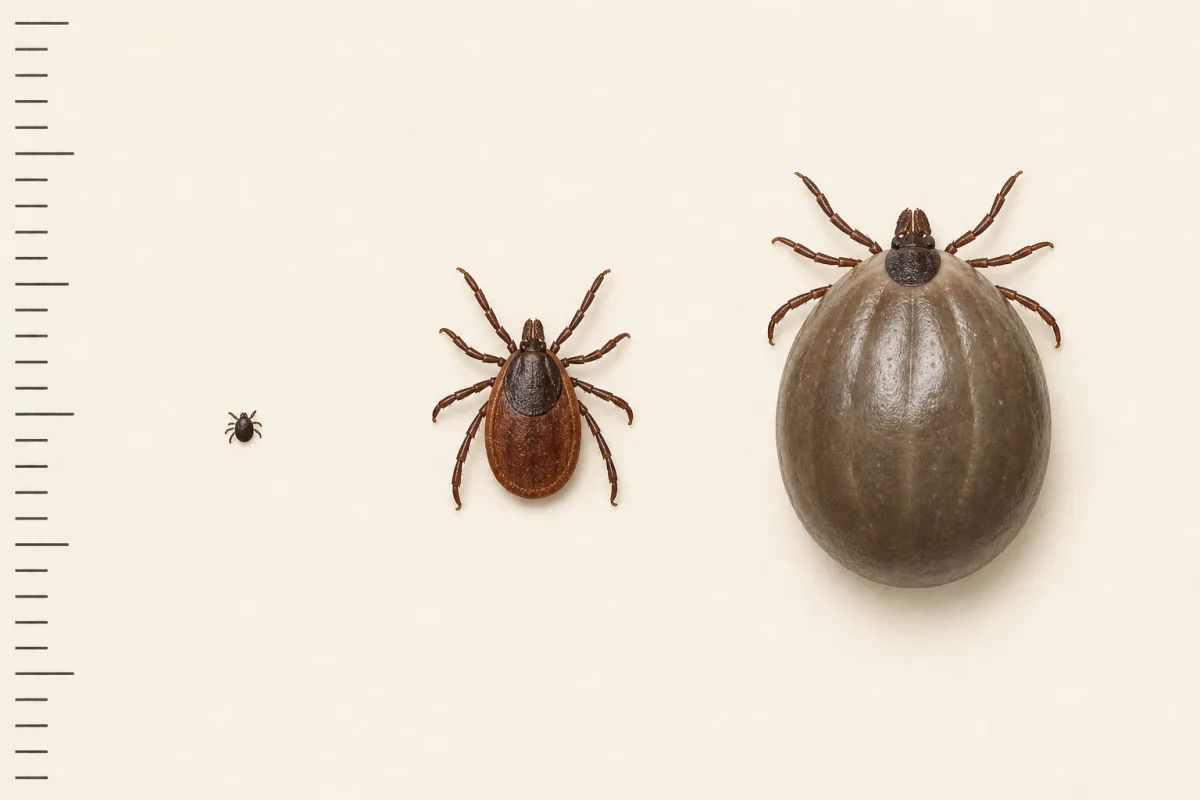
The simplest answer to tick what do they look like is: small, oval-bodied arachnids with eight legs as adults and six legs when very young larvae. They do not have antennae. Depending on the stage, a tick may appear flat and tiny, or swollen and gray-brown after feeding.
| Tick stage or condition | What it may look like | Common confusion |
|---|---|---|
| Unfed nymph | Very small dark speck, often poppy-seed sized | Dirt, pepper, small scab |
| Adult tick | Small oval body, often brown, black, or reddish | Flea, tiny beetle, skin spot |
| Fed tick | Rounder, larger, and swollen; may look gray or pale | Skin tag, blister, wart |
| Detached tick | May look flat, empty, or crushed | Bug fragment, dirt clump |
A useful way to think about a tick looks like question is this: the less engorged the tick is, the more it resembles a tiny seed. The more it has fed, the more it can look like a small rounded bump attached to the skin.
Key identification features
If you are comparing something on skin, clothing, or pet fur, look for these features:
- Oval body shape rather than a round dot.
- Eight legs on adults and nymphs; the legs may be hard to see without magnification.
- No wings and no visible antennae.
- Dark head-to-body contrast in some species, though colors vary widely.
- Slow movement when crawling on clothing, skin, or fur.
If you are checking markings and pattern details, the Tick Markings: Complete Guide article can help you understand what to look for without relying on a close-up guess.
How a tick bite can look
People often search for tick bite what does it look like after noticing redness or irritation. A bite may appear as a small red bump, mild pink irritation, or a tiny puncture area. Some bites are barely visible at first. Others become itchy or irritated from skin sensitivity or scratching.
Important: the appearance of a bite can vary a lot, and a rash or redness can have many causes. A bite mark alone is not enough to confirm a tick exposure.
Common visible clues
- A small red or pink bump
- Mild swelling around the spot
- Local itching or tenderness
- A small attached tick if it is still present
- In some cases, a larger expanding rash that needs medical attention
For more visual comparison, see the Look for Ticks: Complete Guide page, especially if you need a practical step-by-step check after time outdoors.
What a tick looks like on a dog
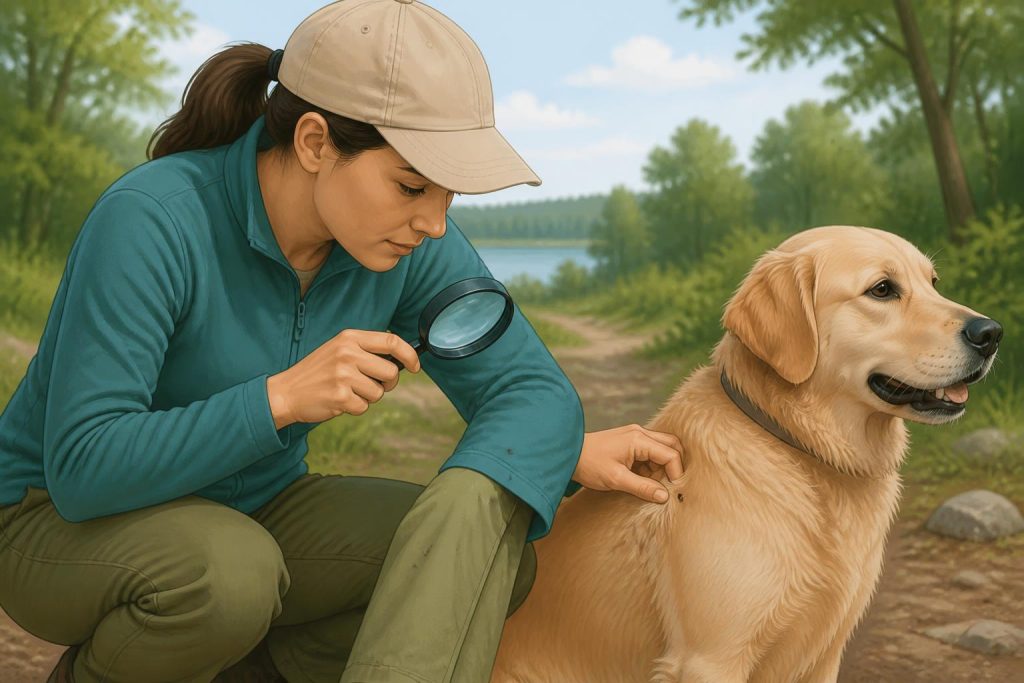
When people ask dog tick look like or tick look like on a dog, the answer depends on the dog’s coat and the tick’s feeding stage. On short fur, a tick may be easier to spot as a small dark oval on the skin. On long or dense coats, it may hide near the ears, neck, armpits, groin, between toes, or under the collar.
On dogs, ticks can be mistaken for:
- Small skin tags
- Warts or benign bumps
- Fleas or flea dirt
- Plant seeds or debris caught in the coat
If you are trying to identify ticks on pets, the Dog Tick Identification and Dog Tick Species: Complete Guide pages can be useful next reads. For bite-related examples on pets, compare with Dog Tick Bite Photos: How to Identify It Clearly.

Quick comparison: tick vs. look-alikes
| Thing you might see | How it differs from a tick |
|---|---|
| Flea | Often narrower, laterally compressed, and more active; not attached to the skin in the same way |
| Skin tag | Usually flesh-colored and part of the skin, not an insect body |
| Dirt or debris | Does not have legs or body structure; may wipe away |
| Tick | Oval body, eight legs in later stages, may be attached and hard to remove by brushing |
Photo clues that help with identification
When you zoom in on a suspected tick, try to notice body shape, leg count, and whether the object is attached. A photo can also help you tell whether you are seeing a tick or a bite mark left behind. If you want a more structured visual reference, the Identify Tick by Photo page is a helpful companion to this guide.
Good photo clues include:
- Flat oval shape before feeding
- Rounder, balloon-like look after feeding
- Small legs clustered near the front of the body
- Color variations from brown to black to grayish tones
- Attachment at the skin or fur level rather than loose movement like a flea
If you are comparing likely stages, the Nymph Tick Identification page can help with one of the most commonly overlooked sizes.
When to seek help
You should consider medical or veterinary guidance if:
- The tick is attached and you cannot remove it safely.
- A bite area becomes increasingly red, swollen, or painful.
- You notice fever, fatigue, rash, or flu-like symptoms after possible exposure.
- Your dog seems unwell after a tick encounter.
- You are unsure whether the object is a tick, a bite, or something else on the skin.
When to call your vet. If you are not sure you can remove the tick safely, or if part of it stays in the skin, let your veterinarian do it. Contact them either way if your dog develops a rash around the bite, a fever, lameness that moves between legs, swollen joints, or unusual tiredness in the weeks after a bite — those are the signs that need a clinical opinion, not a photo comparison.
If symptoms appear after outdoor exposure, do not rely on appearance alone. Tick-related skin changes can be subtle, and not every bite looks the same.
Simple steps to check for ticks
- Inspect clothing, shoes, and gear after being outdoors.
- Check skin folds, hairline, behind ears, waistline, under arms, and behind knees.
- For dogs, check around ears, neck, belly, tail base, and between toes.
- Use a bright light and, if needed, a magnifying tool.
- If you find something attached, handle it carefully and seek guidance if needed.
For a more complete outdoor check routine, visit the Tick Identification Chart if you want a side-by-side reference while comparing body shape and size.
FAQ
What does a tick look like when it is small?
A small tick may look like a tiny dark speck, seed, or dot. Nymphs are especially easy to miss because they can be extremely small and flat before feeding.
Can a tick look like a mole or skin tag?
Yes, especially after feeding. A swollen tick can resemble a small bump, skin tag, or wart. If it seems attached or has leg-like features, it may be worth closer inspection.
What does a tick bite look like on skin?
A tick bite can look like a small red bump, mild irritation, or a tiny puncture area. Some bites are not obvious at first, so watching for changing redness or symptoms matters.
What do dog ticks look like on a dog?
On dogs, ticks may appear as small dark ovals attached to the skin, or as larger swollen bumps after feeding. In long fur, they can be hidden and easy to confuse with debris or skin growths.
Is there a simple way to identify a tick from a photo?
A clear photo can help, especially if it shows body shape, leg placement, and whether the object is attached. The Tick Identifier app can support quick comparison from your phone, and you can download it here: Tick Identifier app on the App Store.
Final takeaway
If you came here asking tick what does it look like, the main idea is that ticks are small oval-bodied arachnids that may look like specks, seeds, or swollen bumps depending on their stage. On people and pets, they are easy to confuse with harmless skin spots or debris, so a careful visual check matters.
If you want a quick mobile tool for comparison, the Tick Identifier app can help you check your find and move from uncertainty to a clearer next step.
Try the Tickidentifier app
Use the app when you want a faster photo-based check before comparing details manually.