
Tick Identification Guide
Dog Tick Species: The Ones That Target Pets
Learn how to recognize common dog tick species, compare key identification features, and know when to seek help. Includes photo clues, safety tips, and a tick ID app CTA.
If you are trying to identify dog tick species, the most useful starting point is to look at shape, size, color, leg pattern, and where the tick was found. Different tick species can look similar at first glance, especially when they are small or partially fed. This guide is designed to help you compare common features without making assumptions about diagnosis or risk.
Safety note: This article is for identification and general awareness only. Ticks can carry pathogens, but appearance alone does not confirm infection. If you are concerned about a bite, symptoms, or a possible exposure, seek guidance from a qualified healthcare professional or veterinarian as appropriate. For general safety information, public health sources such as the CDC and local health departments are the best references.
What people mean by dog tick species
The phrase “dog tick species” is often used in a broad way to mean ticks that are commonly found on dogs or around places dogs spend time. In practice, dog owners may be trying to identify one of several hard tick species, or they may simply want to know whether a tick on their pet is likely to be an indoor, outdoor, or trail-associated species.
A practical approach is to focus on visible traits first, then compare them with a reliable chart or photo guide. If you need a second look, you can use the Tick Identification Chart or the Dog Tick Identification guide for a more structured comparison.
Identification features to look at first
When comparing dog tick species, these features are usually the easiest to spot:
- Body shape: oval, rounded, or flattened
- Size: tiny seed-like ticks vs. larger adults
- Color: brown, reddish-brown, dark, or patterned
- Legs: often darker than the body, sometimes hard to see in photos
- Scutum: the hard shield on the back; its color and size can help
- Location found: ears, neck, paws, fur line, or elsewhere on the dog
- Whether it is attached or crawling: attached ticks may appear swollen after feeding
Because size changes as ticks feed, a fully engorged tick can look very different from a flat one. That is one reason photo-based identification can be helpful, especially when the tick is too small to inspect closely by eye.
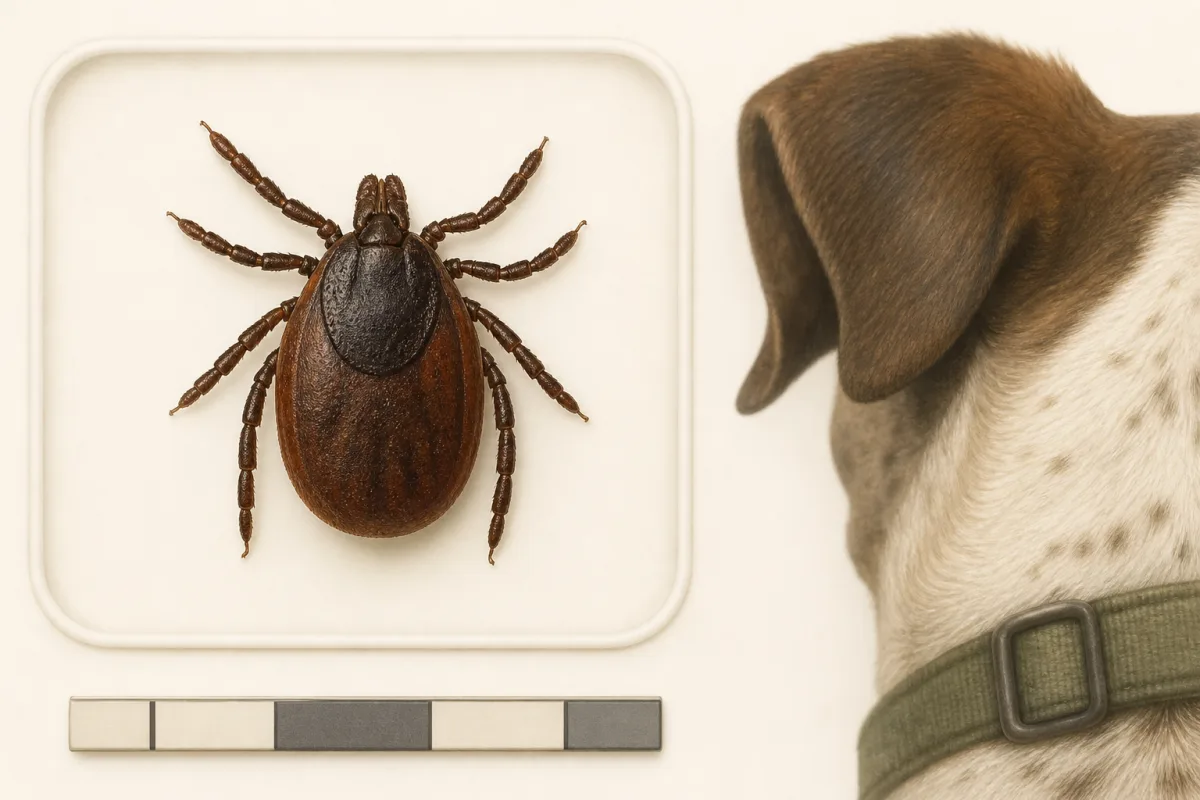
Common visual clues in dog tick species
Below is a simple comparison table that can help you narrow down common possibilities. It is not a diagnosis tool, but it can make the next step easier.
| Visual clue | What to notice | Why it helps |
|---|---|---|
| Body size | Pinhead-sized, small, or larger and easy to see | Ticks are easier to compare when you know whether they are nymphs or adults |
| Back pattern | Plain dark back vs. lighter or patterned markings | Some species have more noticeable patterning than others |
| Shape of mouthparts | Longer or shorter visible mouthparts | Can help distinguish certain hard tick groups in clear photos |
| Engorgement | Flat, slightly rounded, or balloon-like | Feeding changes the tick’s appearance significantly |
| Where found on the dog | Head, ears, neck, under collar, between toes | Different areas are easier for ticks to attach and hide in fur |
Photo clues that make identification easier
Clear photos can be more useful than trying to judge a tick in poor lighting. If you are using a phone camera, try to capture the tick from more than one angle. Good photos can reveal body outline, markings, and whether the tick is flat or feeding.
For a practical walkthrough of image-based identification, see Identify Tick by Photo. If you are specifically comparing a tick found on a dog, the page on Dog Tick Bite Photos: How to Identify It Clearly may also help you understand what visible bite-area clues can and cannot tell you.
Try these photo tips:
- Use bright, natural light when possible
- Place the tick beside a small object for size reference, but do not touch it with bare fingers
- Take one photo from above and one from the side
- Capture the legs if visible
- Keep the image in focus; blurry photos can lead to confusion between nymphs and adults
If the tick is already removed, save it in a sealed container or bag if local guidance recommends it, and label the date and location found. This can be useful if a clinician or veterinarian asks for more detail later.
Dog tick species vs. deer tick and nymphs
People often compare dog tick species with other common ticks because they can look similar at a glance. Deer ticks, for example, may be confused with other small dark ticks. Nymphs are especially easy to miss because they are tiny and can be mistaken for debris, freckles, or a scab.
If you are comparing a small tick and wondering whether it may be a deer tick, the Deer Tick Identification page is a useful next step. For very small immature ticks, the Nymph Tick Identification page can help you understand why size alone is not enough to identify a tick accurately.
In everyday use, the main takeaway is simple: a tick on a dog is not automatically a dog-specific tick, and a tiny tick is not automatically harmless. Use visible traits, not assumptions.
How to inspect a dog safely
If you are checking your dog after a walk, keep the process calm and methodical. The goal is to spot and remove ticks early, not to rush through the fur.
- Run your fingers slowly over the coat, feeling for small bumps.
- Check high-risk areas like the ears, neck, collar line, under the legs, belly, and between the toes.
- Part the fur so you can see the skin, especially in dense-coated dogs.
- Look for moving ticks, attached ticks, or a small dark spot that seems fixed in place.
- If you find a tick, follow a reliable removal method or ask a vet if you are unsure.
A tick that has already bitten or fed may create redness or irritation around the area, but visible skin changes alone do not identify the species. Keep observations factual: where you found it, how big it looked, and whether it was attached.
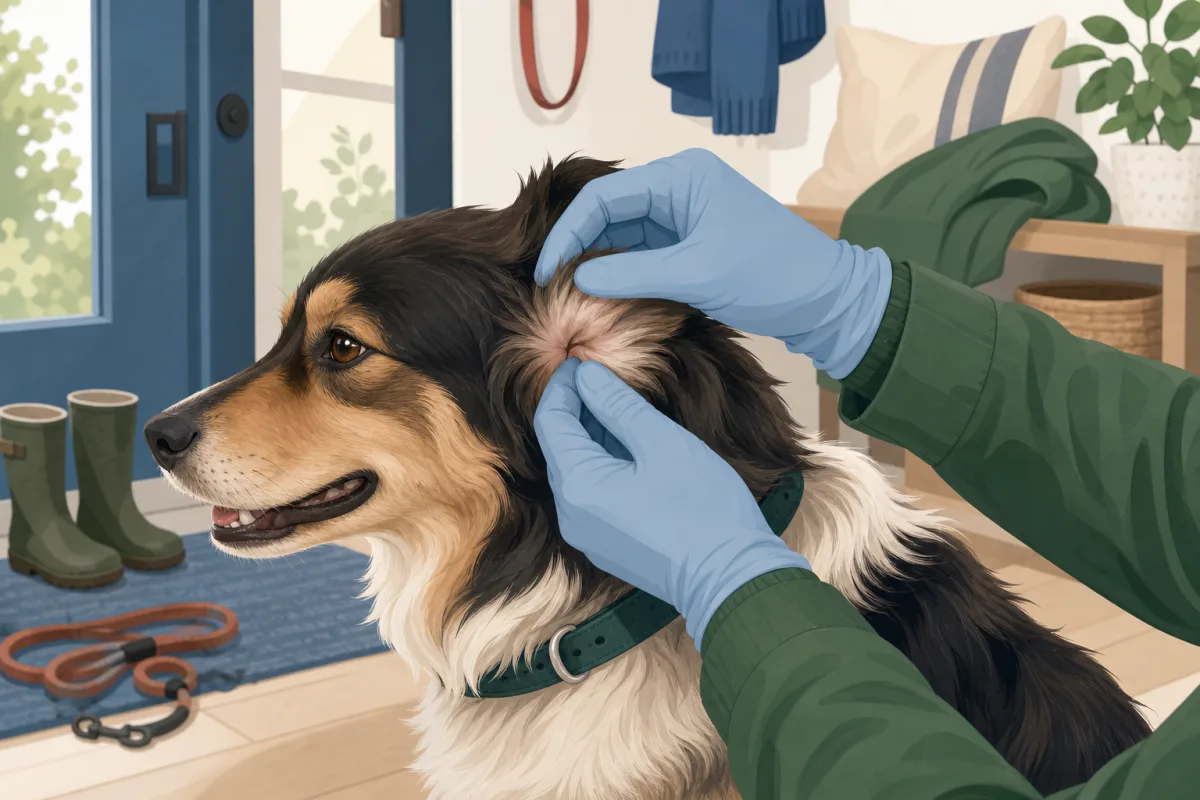
When to seek help
It is a good idea to seek professional help if:
- The tick is deeply attached and you are unsure how to remove it safely
- There is significant swelling, bleeding, or persistent irritation
- Your dog seems unwell after a tick exposure
- You notice a rash, fever, fatigue, or other symptoms in a person after a bite
- You cannot tell whether the tick is a small nymph or another species
For the safest interpretation of symptoms, rely on a medical professional or veterinarian rather than appearance alone. Ticks can be relevant to several health concerns, but this page is intended to help with identification, not diagnosis.
Quick comparison checklist
Before deciding what you have found, ask yourself these questions:
- Was the tick flat or already engorged?
- Was it found crawling on fur or attached to skin?
- Was it tiny like a poppy seed or larger and easier to notice?
- Did the body look plain or patterned?
- Do you have a sharp photo taken in good light?
If you can answer most of these, you are in a better position to compare it against a guide. If not, a photo-based tool can save time.
Use Tick Identifier for a second look
If you want a quick way to compare a tick image against helpful reference guidance, try the Tick Identification App. The site also offers the Tick Identifier resource for people who want a straightforward way to organize what they are seeing.
For mobile users, the app is available here: App Store download. It can be a convenient next step if you are comparing photos from a recent walk, campsite, or backyard check.
FAQ
Can I identify dog tick species from a photo alone?
Sometimes a clear photo is enough to narrow down possibilities, but not always. Lighting, blur, angle, and feeding stage can all affect accuracy. A comparison with a trusted chart or guide is usually better than guessing from memory.
Are all ticks found on dogs the same species?
No. Dogs can pick up different tick species depending on region, habitat, and season. A tick found on a dog may also be a species that commonly feeds on other animals or people.
What is the difference between a dog tick and a deer tick?
They are different tick types and can look similar when small. Visual traits such as body shape, color, and size can help, but a reliable identification guide is the best way to compare them. Start with the deer tick guide if that is one of your main concerns.
Should I keep the tick after removal?
In some situations, keeping the tick may be useful for reference if a clinician or veterinarian asks about it later. Store it safely in a sealed container or bag and note the date and where it was found, if appropriate.
What should I do next if I am still unsure?
Use a clear photo, compare it with an identification chart, and consider asking a professional if the situation involves symptoms, a concerning bite site, or an embedded tick. The Tick Identifier app can also help you organize the image and comparison process.
If you are still sorting through a possible tick on your dog, take a photo, compare it carefully, and use trusted resources rather than assumptions. A few minutes of careful identification can make the next step much clearer.
Try the Tickidentifier app
Use the app when you want a faster photo-based check before comparing details manually.