Tick Identification Guide
Dog Tick Bite Photos: Spotting Bites in Fur
Real dog tick photos show an attached tick and an engorged tick off the dog. Learn how to inspect fur and when a skin change needs veterinary advice.
Updated September 7, 2026: sources and examples checked.
If you’re searching for dog tick bite photos, you’re probably trying to tell the difference between a simple skin bump and a tick-related spot on your dog. That’s a smart first step. A tick bite on dog skin can look mild at first, and the tick itself may be easy to miss once it has detached.
This guide explains the visual clues that can help you spot a possible dog tick bite, what to compare in photos, and what to do next if you think your dog has been bitten. It is for identification support only, not a diagnosis.
Safety note: Remove an attached tick promptly using a suitable tick-removal tool and its instructions, or ask a vet for help if unsure. Contact your vet if the site becomes red, swollen or infected, if part may remain, or if your dog seems unwell. Source
For a broader reference on tick types, you can also review Tick Identification Chart or learn more about Dog Tick Identification.
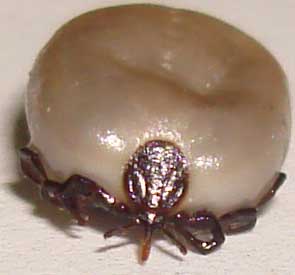
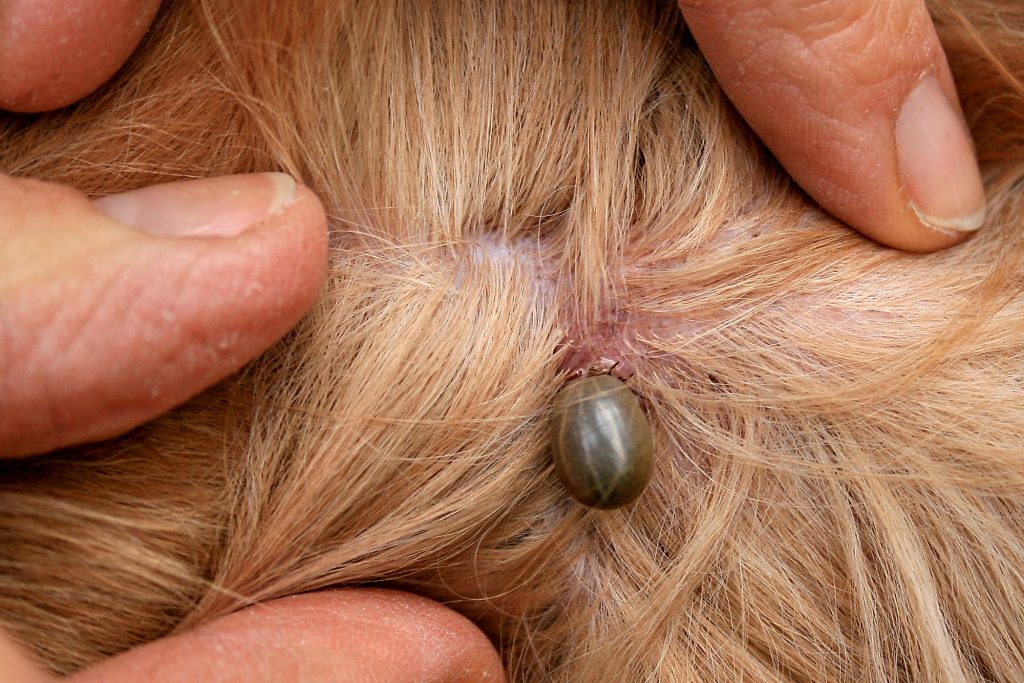
The first photograph shows what to look for while gently parting fur: a body attached at the skin, with the surrounding coat moved aside. The second makes the swollen body and legs easier to see. These are two reference photographs, not a before-and-after case. A species name or infection status cannot be established from these pictures alone.
After removal, a skin bump alone does not establish the cause. This guide does not include a verified photographic series of healing dog bite wounds. Do not compare your dog’s skin to a human Lyme bull’s-eye rash. Ask your vet about a worsening attachment site or any change in your dog’s health. Source
What a dog tick bite may look like
A dog tick bite can be subtle. In many cases, the main clue is not a dramatic wound, but a small, localized skin change where a tick attached. If you are comparing dog tick bite photos, look for these common features:
- A small red bump or pink spot at the bite site
- Mild swelling around the area
- A dark speck or scab-like point, especially if the tick was recently removed
- Hair thinning around the spot from licking or scratching
- A tiny sore that looks irritated but not deeply open
Some dogs barely react, while others scratch or lick the area. A bite from dog tick exposure may leave only a small mark, which is why photos taken close-up with good lighting can be helpful.
Common photo clues to look for
| What you see in a photo | What it may suggest | Helpful note |
|---|---|---|
| Small raised bump | Possible tick attachment site | Check whether the bump is firm, itchy, or centered on a tiny spot |
| Red ring or pink patch | Local skin irritation | Can also happen with scratching or other insect bites |
| Dark dot in the center | Scab, tick mouthparts, or debris | Do not dig at it; monitor and ask a vet if unsure |
| Hair parted around a small sore | Dog has been licking or scratching | Compare with other areas for symmetry and pattern |
| Attached oval body on skin | Active tick, not just a bite mark | Use safe removal steps if you know how |
Dog tick bite photos: how to compare them correctly
When looking at dog tick bite photos, it helps to compare the same area over time. A single image can be misleading because lighting, fur length, and camera distance change how a spot appears.
Try this simple comparison process:
- Take one close-up photo and one wider photo of the area.
- Part the fur gently so the skin is visible.
- Look for size, color, and whether the spot is flat or raised.
- Check if the mark is stable, shrinking, or getting more irritated.
- Compare it with other skin spots on your dog.
A fresh bump is not enough to identify a tick bite. If it becomes swollen, painful or starts oozing, ask your vet rather than assuming it is a normal healing stage.
Not every bump is a tick bite
A tick bite dog owners notice in photos can resemble several other common skin issues. That’s why clear images matter, but so does caution. Similar-looking spots can come from:
- Flea bites or flea allergy irritation
- Minor skin infections
- Hot spots from licking
- Small cuts or scrapes
- Other insect bites
If the only visible sign is a small bump, that alone does not confirm a tick bite to dog skin. The presence of an attached tick, a recent outdoor exposure, or a remembered removal event makes the clue more meaningful.
What to do if you think it is a dog tick bite
If you suspect a dog tick bite, start with a calm check of your dog’s coat and skin. The goal is to confirm whether a tick is still attached and to prevent the area from getting more irritated.
Use these steps as a general guide:
- Part the fur and inspect the spot under bright light.
- If the tick is still attached, remove it carefully with fine-tipped tweezers or a tick tool if you know how.
- Clean the area with mild soap and water or as directed by your veterinarian.
- Watch the site for a few days for swelling, redness, or discharge.
- Monitor your dog for changes in energy, appetite, or behavior.
If you are unsure whether you are seeing a dog bite tick situation or simply a healing skin bump, a photo-based check can help you keep track of changes. For broader photo-supported identification, see Identify Tick by Photo.
Warning: Do not crush the tick with bare fingers, apply heat, petroleum jelly, or harsh chemicals to force removal. Public health guidance recommends prompt, careful removal rather than squeezing or irritating the tick.

When to seek help
Many tick bites are minor, but some situations deserve professional advice. A vet visit or call is a good idea if:
- The tick was attached for a long time and you are worried about exposure
- The bite site becomes very red, warm, swollen, or painful
- There is pus, bleeding that does not stop, or a growing open sore
- Your dog seems tired, feverish, lame, or less interested in food
- You cannot remove a tick safely
- Your dog has a history of skin sensitivity or immune issues
If you are looking at dog tick bite what to do guidance, the safest answer is simple: remove the tick if possible, clean the site, observe the area, and contact a veterinarian if the dog’s condition changes.
Quick photo checklist before you decide
- Is there an attached tick visible?
- Does the spot have a central dark point or scab?
- Is the redness small and localized, or spreading?
- Does the dog keep licking, scratching, or reacting to touch?
- Has the mark changed since your last photo?
How the Tick Identifier app can help
The Tick Identification App page explains Ticky as a camera-filter aid for looking through pet fur. Filters may make visual details easier to inspect; they do not confirm a tick species, diagnose the cause of a bump or rule out disease.
You can also check the app directly here: Tick Detector Checker Ticky on the App Store.
Ticky’s current App Store description lists camera modes for pet tick checks, not a symptom diary or a feature for following a bite over time. Keep dates and unfiltered photos in your own records if you need to show changes to a veterinarian.
FAQ
What does a dog tick bite look like in photos?
Usually it appears as a small red bump, a pink patch, or a tiny sore where the tick attached. In some photos, the only clue is a dark dot or scab-like spot. A clear picture with parted fur helps a lot.
Can a tick bite on dog skin look like a pimple?
Yes. A small tick bite can resemble a pimple, bug bite, or irritated hair follicle. That is why it helps to look for a central point, recent outdoor exposure, and whether the spot changes over time.
What should I do if I find an attached tick?
Remove it carefully if you know the proper technique, clean the skin, and monitor the area. If you are unsure, ask a veterinarian for help rather than trying to force it out.
Is a small red spot always a tick bite?
No. Many minor skin issues can look similar. A photo can guide your next step, but it does not prove the cause by itself.
What if the bump gets larger after the tick is removed?
A little irritation can happen, but increasing redness, swelling, pain, or discharge should be checked by a veterinarian.
For more visual identification help, explore the Tick Identification Guides. App camera filters are for finding visible details in fur, not deciding whether a skin lesion is harmless.
Explore Ticky for pet tick checks
Ticky offers camera modes for pet-fur checks. It does not diagnose a rash or infection.